
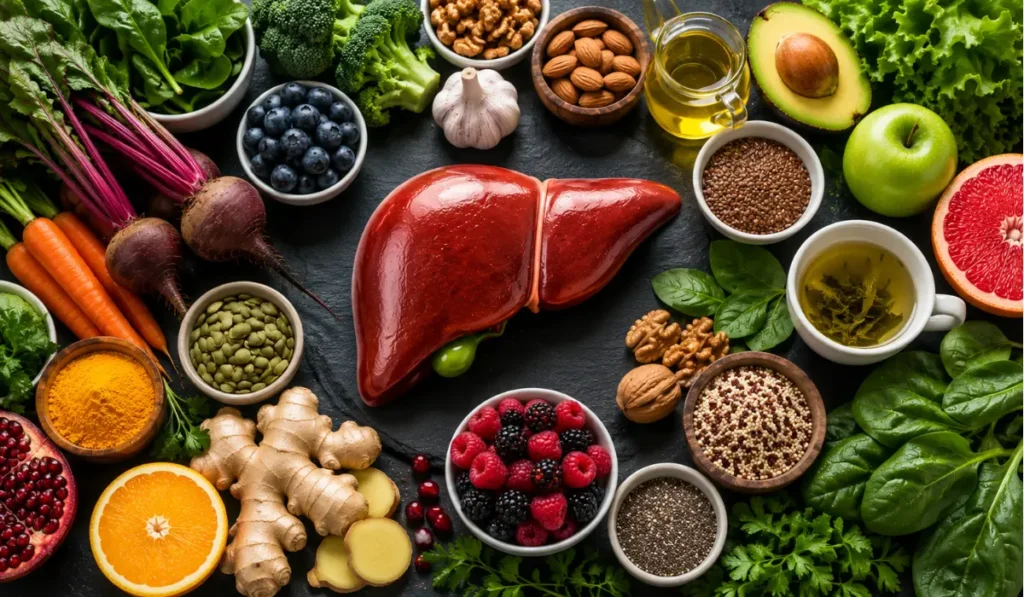
If you want to protect your liver, do not depend on detox drinks, powders, or one miracle food. The liver improves when your daily meals reduce excess fat, sugar load, alcohol burden, and weight-related pressure on the body.
At Dr Jitendra Mohan Jha Liver & Gastro Clinic, patients commonly ask about superfoods for the liver, especially after fatty liver is found on ultrasound. The practical answer is simple: choose foods that help control weight, improve sugar balance, reduce liver fat, and support digestion.
Here Are The Most Useful Liver-Friendly, Super Foods To Start With.
1. Leafy Green Vegetables
Leafy greens are one of the best everyday foods for liver health. Spinach, methi, bathua, sarson saag, cabbage, lettuce, and amaranth leaves are low in calories and rich in fibre.
They are helpful for fatty liver because they fill your plate without adding too many calories. This can reduce overeating of rice, roti, fried snacks, and oily curries.
The best way to eat them is simply: lightly cooked, steamed, or prepared with less oil. Avoid making greens unhealthy by adding too much ghee, butter, cream, or fried masala.
For patients with fatty liver, one good habit is to include vegetables in both lunch and dinner. This small change can make your overall meal lighter and better for liver health.
2. Whole Grains and High-Fibre Foods
Whole grains are better for the liver than refined carbohydrates. Oats, dalia, barley, millets, whole wheat roti, and controlled portions of brown rice can support better sugar and weight control.
This matters because fatty liver is often linked with diabetes, belly fat, high triglycerides, and insulin resistance. When your diet has more fibre, you feel full for longer and are less likely to snack on biscuits, sweets, fried items, or packaged foods.
Good options include:
- Oats with nuts or seeds, without sugar
- Vegetable dalia
- Whole wheat roti with dal and sabzi
- Millets in controlled portions
- Chana, sprouts, or dal-based meals
But portion size still matters. Whole grains are healthier than maida, but eating too much of any carbohydrate can still affect weight and fatty liver.
Also Read: When Should You See a Gastroenterologist? Signs You Should Not Ignore
3. Dal, Beans, Chana, and Other Protein-Rich Foods
Many patients eat enough carbohydrates but not enough protein. This imbalance can increase hunger, weakness, and repeated snacking.
Dal, chana, rajma, sprouts, soy, curd, paneer in moderation, eggs, fish, and lean chicken can be useful depending on your health condition and food preference.
Protein helps in three ways:
- It keeps you full for longer
- It supports muscle health
- It reduces dependence on rice, roti, and snacks
For liver health, the cooking method is important. Simple dal with mild seasoning is far healthier than dal overloaded with ghee. Roasted chana is better than fried namkeen. Grilled or boiled protein is better than deep-fried protein.
If you have advanced liver disease, kidney disease, or swelling in the body, do not follow a high-protein diet without medical advice.
4. Nuts and Seeds in Small Portions
Nuts and seeds can be included as part of a liver-friendly diet, but the quantity should be controlled.
Good options include:
- Almonds
- Walnuts
- Flaxseeds
- Chia seeds
- Sunflower seeds
- Pumpkin seeds
They provide healthy fats, fibre, and minerals. For patients searching for foods for liver inflammation, nuts and seeds may be useful when they replace fried snacks, not when they are added on top of an already heavy diet.
A small handful is enough. Avoid salted nuts, fried nuts, sugar-coated nuts, and large portions.
5. Unsweetened Coffee
Coffee, when taken without sugar and heavy cream, may support liver health in some people. It is often discussed in liver health research because regular unsweetened coffee intake has been linked with better liver enzyme patterns and lower risk of liver scarring in some studies.
But coffee is not a treatment. It should not be used as a substitute for medical care.
Avoid or limit coffee if you have:
- Severe acidity
- Palpitations
- Sleep problems
- Uncontrolled blood pressure
- Pregnancy-related restrictions
- Caffeine sensitivity
For most patients, 1 to 2 cups of plain coffee may be acceptable, but sugar-loaded coffee, cold coffee, and cream-heavy coffee are not liver-friendly choices.
Foods for Liver Inflammation: What Should You Eat?
Liver inflammation can happen due to fatty liver, alcohol use, viral hepatitis, certain medicines, autoimmune liver disease, or other liver conditions. Food can support liver health, but it cannot treat every cause of liver inflammation. If your SGPT, SGOT, bilirubin, or GGT is high, do not depend only on diet. Get the cause checked.
For daily liver support, your plate should be simple and balanced:
- Half plate: vegetables or salad
- One-fourth plate: protein such as dal, chana, curd, paneer, egg, fish, or lean chicken
- One-fourth plate: roti, rice, dalia, oats, or millet in controlled quantity
- Small portion: nuts, seeds, or healthy oil
- Drink: water, chaas, or an unsweetened drink
This kind of food pattern is useful for fatty liver, weight control, diabetes control, and overall digestion. It also reduces the load of excess sugar, refined carbs, and fried foods on the liver.
Good foods for liver inflammation may include green vegetables, whole grains, dal, beans, sprouts, seasonal fruits, curd, nuts, seeds, and lean protein. But the exact diet should change if the patient has cirrhosis, swelling, low sodium, kidney disease, diabetes, or severe weakness.
Bad Food for Liver: What Should You Reduce?
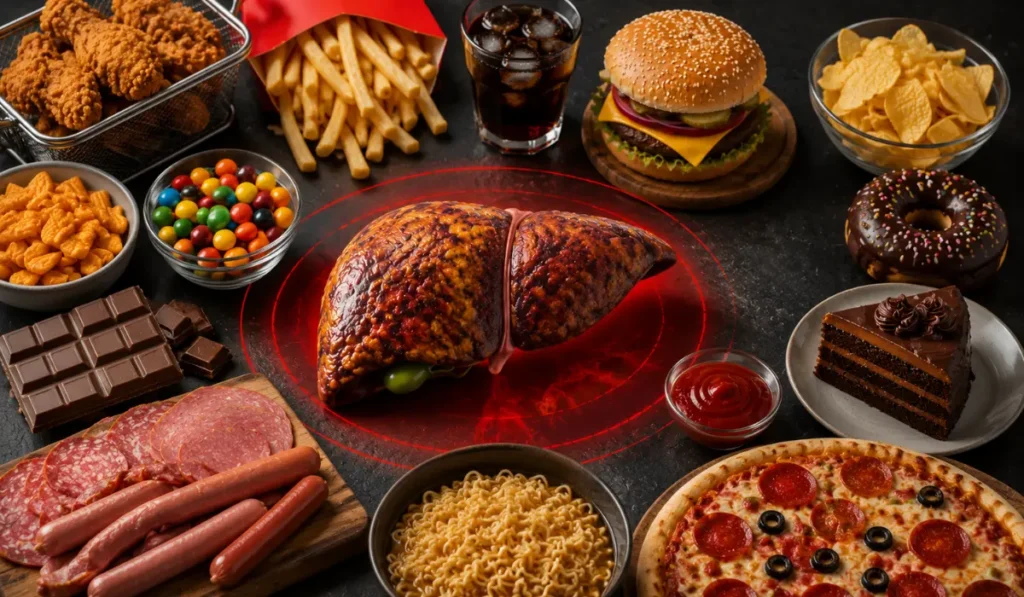
Eating healthy foods is important, but reducing harmful foods is equally important. Many patients eat a few healthy foods in the morning but continue to eat sweets, fried snacks, sugary tea, cold drinks, alcohol, and late-night heavy meals. This will not help the liver much.
Common bad foods for the liver include:
- Cold drinks, packaged juices, energy drinks, and sweetened beverages
- Sweets, cakes, biscuits, chocolate, and desserts
- Deep-fried snacks like samosa, pakora, chips, puri, and kachori
- Maida foods like white bread, naan, pizza base, noodles, and bakery items
- Reused frying oil, vanaspati, and trans-fat-rich foods
- Processed meat, very oily meat, and frequent red meat
- Alcohol, especially in fatty liver, hepatitis, or raised liver enzymes
- Very salty packaged snacks, pickles, papad, and namkeen in excess
If you have fatty liver, the biggest mistake is thinking, “I do not drink alcohol, so my liver is safe.” Non-alcoholic fatty liver is very common and is often linked with excess calories, diabetes, belly fat, high triglycerides, and low activity.
Another mistake is replacing food with fruit juice. Whole fruit in controlled quantities is better than juice. Juice removes fibre and can add too much sugar quickly, especially for patients with fatty liver or diabetes.
How to Make Your Liver Healthy Again
The liver can improve in many patients, especially when fatty liver or early-stage liver damage is detected on time. But the plan should be practical and consistent.
To make your liver healthier again, focus on these steps:
- Lose weight gradually if you are overweight
- Walk at least 30 minutes most days
- Reduce sugar, sweets, fried foods, and refined flour
- Avoid alcohol if your doctor has advised it
- Control diabetes, cholesterol, thyroid, and blood pressure
- Sleep on time and avoid late-night heavy meals
- Do not take unnecessary painkillers, herbal medicines, or liver tonics
- Repeat LFT, ultrasound, FibroScan, or other tests as advised
Do not try crash dieting. Losing weight too fast can create other health problems and is difficult to maintain. A steady, realistic plan works better for fatty liver.
Also, do not start “liver detox” supplements without medical advice. Some herbal products can harm the liver instead of helping it. If your liver enzymes are high, the safer approach is to diagnose the reason first.
Is a 7-Day Meal Plan for Fatty Liver Useful?
A 7-day meal plan for fatty liver can be useful as a starting point, but it should not be copied blindly. A person with diabetes, obesity, high cholesterol, thyroid issues, kidney disease, or advanced liver disease may need a different plan.
A simple fatty liver-friendly day can look like this:
Morning: Unsweetened tea or coffee, or plain warm water. Avoid sugar, biscuits, and fried snacks.
Breakfast: Vegetable oats, dalia, poha with vegetables, sprouts, curd, or 2 rotis with sabzi.
Lunch: Controlled rice or roti, dal, sabzi, salad, curd, and a protein source if needed.
Evening: Roasted chana, fruit, sprouts, chaas, or nuts in small quantities instead of samosa, namkeen, or biscuits.
Dinner: Light meal with vegetables, dal, paneer in moderation, egg, fish, or lean chicken as suitable. Keep the rice or roti quantity controlled.
Avoid at night: Sweets, alcohol, fried food, cold drinks, and large rice portions.
For most patients, the aim is not a perfect diet chart. The aim is to repeat better meals daily. A good diet should fit your routine, budget, food preferences, and medical condition.
When Should You See a Liver Specialist?
Food changes are important, but they are not enough in every case. Some liver conditions need proper testing, monitoring, and treatment. If your body is already showing warning symptoms, relying only on diet changes may not be enough. Consult a liver specialist if you have:
- Yellow eyes or yellow urine
- Swelling in the abdomen or legs
- Vomiting blood
- Black stool
- Unexplained weight loss
- Severe tiredness that does not improve
- Loss of appetite for many days
- Confusion, excessive sleepiness, or behaviour changes
- Repeated vomiting
- Long-term alcohol use
- Fatty liver with diabetes, obesity, or high cholesterol
- Abnormal LFT reports
- Low platelet count with fatty liver
- FibroScan showing stiffness or fibrosis
If fatty liver is found early, lifestyle changes can help many patients. But if liver stiffness, scarring, cirrhosis, hepatitis B, hepatitis C, alcohol-related liver disease, or jaundice is present, medical care becomes necessary.
Patients in Patna who have fatty liver, jaundice, abnormal liver reports, stomach pain, acidity, bloating, vomiting, or digestion-related problems should visit a trusted gastroenterology clinic in Patna for proper diagnosis. If you are looking for the best gastroenterologist in Patna, choose a doctor who evaluates the cause instead of only giving temporary medicines.
If you are dealing with fatty liver, abnormal liver function tests, jaundice, abdominal swelling, long-term acidity, stomach pain, or liver-related symptoms, call us at +919942728701 to book an appointment with one of the best liver doctors in Patna for proper evaluation and treatment guidance.
Conclusion
The best superfoods for the liver are simple, regular foods such as green vegetables, whole grains, dal, chana, beans, sprouts, nuts, seeds, curd, lean protein, and unsweetened coffee, if suitable for you. These foods help most when they replace sugar, fried snacks, refined flour, alcohol, and processed foods.
If you want to know how to make your liver healthy again, start with daily habits. Eat lighter meals, reduce sugar and fried foods, walk regularly, control diabetes and cholesterol, avoid alcohol if advised, and do not take random liver supplements.
FAQs
1. What are the best superfoods for the liver?
The best superfoods for the liver include leafy green vegetables, whole grains, dal, beans, chana, sprouts, nuts, seeds, curd, lean protein, and unsweetened coffee if suitable. These foods support weight control, sugar balance, digestion, and overall liver health.
2. What are 5 superfoods for the liver?
Five useful options are leafy green vegetables, whole grains like oats or dalia, dal and beans, nuts and seeds, and unsweetened coffee. These are practical foods that can be added to most Indian diets.
3. What is bad food for liver health?
Common bad foods for liver health include sugary drinks, sweets, fried snacks, maida-based foods, processed foods, excess alcohol, reused frying oil, and very salty packaged snacks. These foods can increase weight, sugar imbalance, triglycerides, and liver fat.
4. What foods are good for liver inflammation?
Foods for liver inflammation may include vegetables, whole grains, dal, beans, sprouts, curd, seasonal fruits in controlled portions, nuts, seeds, and lean protein. But liver inflammation can have many causes, so high liver enzymes should be checked by a doctor.
5. Can fatty liver become normal with diet?
Fatty liver can improve in many patients when it is detected early and managed with weight loss, diet control, exercise, diabetes control, cholesterol control, and reduced alcohol intake. Advanced liver disease needs medical supervision.
6. Is a 7-day meal plan for fatty liver enough?
A 7-day meal plan for fatty liver is only a starting point. Real improvement needs long-term food changes, regular walking, weight control, and follow-up tests. Patients with diabetes, kidney disease, cirrhosis, or severe liver problems need a customised diet plan.