
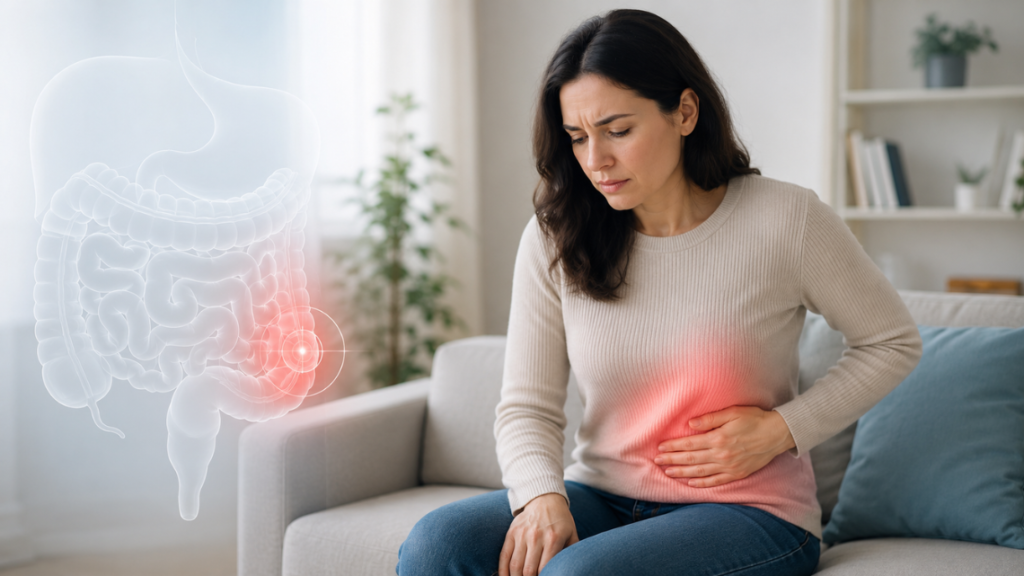
Pain on the lower left side of the abdomen is a common symptom, but the reason can vary from person to person. For some, it feels like gas or heaviness. For others, it may be a sharp pain, cramps, a pulling sensation, or discomfort that comes and goes.
Many people first think it is due to gas or constipation. Sometimes that is true. But the lower left abdomen also includes parts of the large intestine, urinary tract, muscles, and, in women, reproductive organs. That is why the exact cause cannot be confirmed only by the location of pain.
At Dr. Jitendra Mohan Jha Liver & Gastro Clinic, patients dealing with recurring abdominal pain, bloating, constipation, loose motions, blood in stool, or changes in bowel habits are assessed properly to identify what may be causing the problem.
What Is Present in the lower left abdomen?
The lower-left abdomen is the area on the left side of the belly, below the belly button. Doctors may also refer to it as the left lower abdominal region.
Pain in this area may come from:
- Large intestine or colon
- Rectum and lower bowel
- Urinary bladder or urinary tract
- The left ureter, which carries urine from the kidney to the bladder
- Abdominal muscles
- Left ovary or fallopian tube in women
Because many organs are close to each other, pain in this area may be digestive, urinary, muscular, or gynecological. Digestive causes are common, especially when pain is linked with gas, constipation, loose motion, bloating, or a change in stool pattern.
Also Read: When Does Acid Reflux Become GERD?
Common Digestive Causes
Digestive problems are among the most frequent reasons for lower left abdominal pain. The timing and pattern of pain can help. For instance, if the pain reduces after passing stool or releasing gas, the discomfort may be connected to bowel movement or digestion. Pain with fever, vomiting, blood in stool, or unexplained weight loss needs medical attention.
Gas and Bloating
Gas can create cramp-like pain, tightness, pressure, or shifting discomfort in the abdomen. Some patients feel it more on the left side because gas may collect in parts of the colon.
Pain or uneasiness due to gas is usually felt with bloating, frequent burping, a heavy stomach, or a feeling of fullness after eating. Eating quickly, irregular meals, carbonated drinks, heavy food, low physical activity, and constipation may make it worse.
However, not every left-sided pain should be blamed on gas. If pain is severe, keeps returning, or comes with fever, vomiting, blood in stool, black stool, or weight loss, it should be checked.
Constipation
Constipation can cause pressure, cramps, bloating, and pain in the lower abdomen. When stool remains in the colon for too long, it may become hard and difficult to pass.
Constipation-related pain may improve after bowel movement, but it often returns if the bowel habit is not corrected. Some patients also complain of incomplete evacuation, repeated straining, or long toilet sitting.
Constipation should be checked by a doctor when it continues for a long time or comes along with symptoms such as:
- Blood in stool
- Unexplained weight loss
- Persistent bloating
- Change in stool shape
- Repeated abdominal pain
- New constipation after middle age
Repeated use of laxatives without understanding the cause is not a good approach. Treatment should depend on diet, fluid intake, activity level, bowel pattern, medicines, and warning symptoms.
Irritable Bowel Syndrome
Irritable bowel syndrome, or IBS, can cause repeated abdominal pain with changes in bowel habits. IBS can affect bowel movement in different ways, with some people struggling with constipation and others having frequent loose stools.
IBS pain may appear in different parts of the abdomen, including the lower left side. It may become worse with stress, irregular eating, poor sleep, or certain foods. Many patients feel relief after passing stool.
IBS usually does not cause blood in stool, fever, persistent vomiting, or unexplained weight loss. If these symptoms are present, the pain should not be assumed to be IBS without proper evaluation.
Intestinal Infection or Colitis
Pain with loose motion, fever, mucus, urgency, or blood in stool may suggest infection or inflammation in the intestine. This can happen due to contaminated food or water, but other bowel conditions can also cause similar symptoms.
Taking antibiotics or painkillers without medical advice can be risky. Some infections need stool testing and specific medicines, while others may improve with hydration and supportive care. Wrong medicines can delay recovery or hide important symptoms.
Medical evaluation is important if abdominal pain is associated with repeated diarrhea, blood or mucus in stool, fever, dehydration, severe cramps, or weakness.
Diverticular Disease
Diverticular disease happens when small pouch-like areas develop in the wall of the colon. Diverticulitis develops when these tiny bulges in the colon become inflamed and start causing pain or other symptoms.
Diverticulitis can cause steady pain in the lower abdomen, often with tenderness. In some cases, patients may also notice fever, nausea, constipation, loose motions, gas, or abdominal bloating.
This condition should not be managed casually. Depending on severity, a doctor may advise blood tests, imaging, medicines, diet changes, or hospital care.
You May Like: What are the Super Foods for the Liver?
Lower Left Abdominal Pain in Women
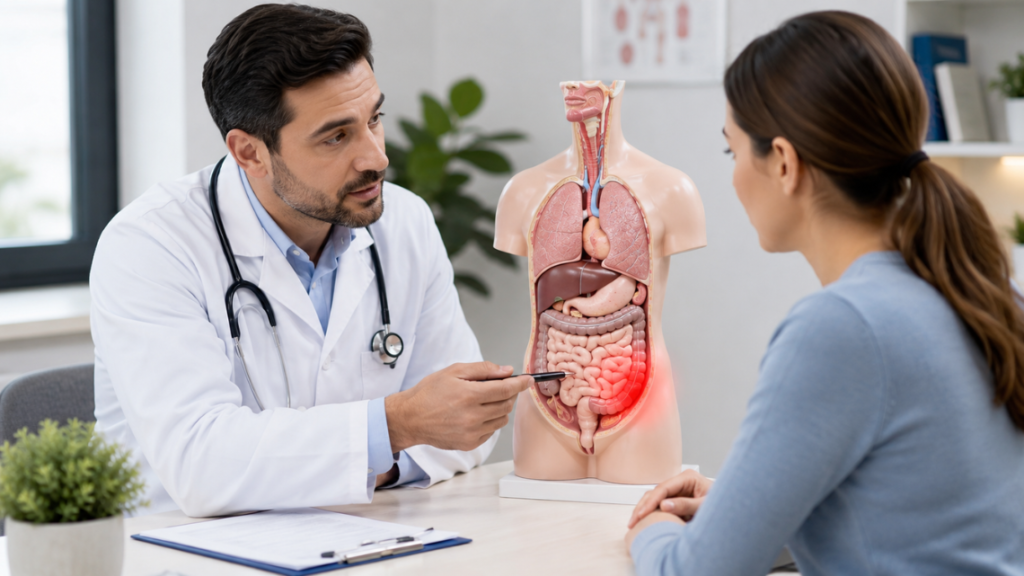
In women, pain on the lower left side may be digestive, urinary, or gynecological. Common digestive causes include gas, constipation, IBS, infection, and colitis. But period-related pain, ovulation pain, ovarian cyst, pelvic infection, endometriosis, urinary infection, kidney stone, or pregnancy-related problems can also cause pain in the same area.
Women should seek urgent medical care if pain is sudden, severe, occurs during pregnancy, or comes with fainting, heavy bleeding, fever, vomiting, shoulder pain, or severe weakness.
If the pain is repeated and linked with bloating, constipation, diarrhea, mucus, blood in stool, or bowel habit changes, a gastroenterologist can evaluate digestive causes. If a gynecological cause is suspected, consultation with a gynecologist may also be needed.
Lower Left Abdominal Pain in Men
In men, lower-left abdominal pain may commonly be linked to digestive issues such as trapped gas, constipation, IBS, gut infection, or swelling in the large intestine. Other possible causes include urinary infection, kidney stone, muscle strain, hernia, or groin-related conditions.
If pain moves toward the groin, testicle, back, or urinary area, it should be taken seriously. Burning during urination, blood in urine, fever, groin swelling, or sudden testicular pain needs urgent medical attention.
Men with lower abdominal pain along with constipation, diarrhea, bloating, mucus, blood in stool, or repeated stool changes should consider a gastroenterology evaluation.
When Should You See a Doctor?
Mild pain due to gas or constipation may improve after passing stool or gas, drinking enough water, walking, and correcting food habits. Still, certain symptoms need timely attention, especially when the pain does not settle or appears with other changes in the body.
Medical advice is important when the pain has any of these features:
- Severe or getting worse
- Sudden and sharp
- Lasting more than 24 to 48 hours
- Coming back repeatedly
- Associated with fever or vomiting
- Linked with blood in stool or black stool
- Associated with persistent constipation or diarrhea
- Linked with unexplained weight loss
- Associated with abdominal swelling
- Coming with weakness, dizziness, or dehydration
- Associated with urinary burning or blood in urine
- Occurring during pregnancy
Severe pain with fainting, repeated vomiting, high fever, rigid abdomen, heavy rectal bleeding, black stool, or pregnancy-related pain should be treated as urgent.
If the pain is different from your usual discomfort, keeps coming back, or appears with warning symptoms, it needs medical attention rather than repeated home treatment.
How a Gastroenterologist Evaluates the Pain
Evaluation starts with understanding the full pattern of symptoms. The doctor may ask where the pain is located, when it started, how long it lasts, what type of pain it is, and whether it is related to food, stool, gas, urination, or movement.
Other important details include constipation, diarrhea, bloating, fever, vomiting, mucus in stool, blood in stool, black stool, weight loss, appetite changes, and medicines already taken. In women, menstrual history, pregnancy possibility, and pelvic symptoms may also be relevant.
Depending on symptoms and examination, tests may include:
- A blood test can help the doctor understand whether infection, anemia, or inflammation may be contributing to the pain.
- Stool test if diarrhea, mucus, or blood is present
- Urine test if urinary symptoms are present
- Ultrasound when abdominal, urinary, or pelvic causes are suspected
- CT scan in selected cases of severe or unclear pain
- Colonoscopy if pain is recurrent with bleeding, anemia, bowel habit changes, or other warning signs
Every patient needs every test. The main goal is to select the most suitable test after considering the patient’s symptoms, age, physical examination, medical history, and risk factors.
Treatment Depends on the Reason
The treatment plan should be chosen only after the doctor understands what is causing the pain. The treatment plan should be based on whether the pain is due to gas, constipation, IBS, infection, colitis, diverticulitis, urinary problems, muscle strain, or gynecological causes.
For gas and bloating, treatment may include food trigger control, regular meals, walking, constipation correction, and digestion-related medicines when needed.
For constipation, the focus is usually on fiber, fluids, bowel routine, stool-softening treatment, and identifying the reason if constipation is long-term.
IBS treatment often involves a mix of dietary adjustments, medicines to control bowel symptoms, better stress and sleep routines, and regular follow-up when symptoms continue. Infection or colitis may need stool testing, hydration, and medicines based on the cause. Diverticulitis may require diet changes, medicines, imaging, antibiotics in selected cases, or hospital care if symptoms are severe.
If urinary or gynecological causes are suspected, the patient may need evaluation by the appropriate specialist. This is why repeated or unclear pain should not be managed only with painkillers, antibiotics, acidity tablets, or home remedies.
Read More: When Should You See a Gastroenterologist? Signs You Should Not Ignore
What You Can Note Before Visiting the Doctor
Before visiting the doctor, observe your symptoms clearly. This can help with faster evaluation.
Note these details:
- When the pain started
- Exact location of pain
- Type of pain: sharp, dull, crampy, burning, pulling, or pressure-like
- Whether it is linked with food, stool, gas, urination, or movement
- Constipation or diarrhea
- Fever, vomiting, mucus, or blood in stool
- Weight loss, weakness, or appetite changes
- Medicines already taken
- In women, period date, pregnancy possibility, or abnormal bleeding
Avoid self-starting antibiotics or taking repeated painkillers without a diagnosis. Painkillers may reduce pain for a short time, but they can also hide important symptoms.
Book Appointment
If lower left abdominal pain keeps coming back or appears with constipation, diarrhea, bloating, stomach cramps, blood in stool, black stool, fever, vomiting, or sudden changes in bowel habits, do not keep treating it as normal gas. For proper evaluation and treatment guidance, call +919942728701 to book an appointment with Dr. Jitendra Mohan Jha, one of the best liver doctors in Patna and a trusted choice for patients searching for the best gastroenterologist in Patna for stomach, intestine, and liver-related problems.
Conclusion
Pain on the lower left side of the abdomen may happen due to simple causes like gas or constipation, but it can also be linked with IBS, infection, colitis, diverticular Other possible reasons include urinary tract concerns, kidney or ureter stones, muscle injury, and female pelvic health conditions.
Location alone cannot confirm the diagnosis. The pattern of pain, stool changes, fever, vomiting, blood in stool, urinary symptoms, weight loss, and duration of symptoms all matter.
If the pain is mild and clearly linked with gas or constipation, basic lifestyle correction may help. However, when the pain is severe, keeps returning, does not settle, or comes with any warning symptom, a proper check-up should not be delayed.
FAQs
1. Why am I feeling pain on the left side below the belly button?
It may happen due to gas, constipation, IBS, intestinal infection, colitis, diverticular disease, urinary problems, kidney stones, muscle strain, or reproductive causes in women.
2. Can gas cause lower left abdominal pain?
Yes, trapped gas can cause crampy or shifting pain. It may improve after passing gas or stool. However, severe or repeated pain should not be assumed to be gas without evaluation.
3. Why do women get pain in the lower left abdomen?
In women, the cause may be digestive, urinary, or gynecological. Common reasons include constipation, IBS, colitis, period pain, ovulation pain, ovarian cyst, pelvic infection, UTI, kidney stone, or pregnancy-related causes.
4. What can lead to lower-left abdominal pain in men?
In men, the cause may be gas, constipation, IBS, diverticulitis, urinary infection, kidney stone, hernia, muscle strain, or groin and testicular conditions.
5. When should lower left abdominal pain be checked?
Pain should be evaluated when it is intense, appears suddenly, keeps getting worse, comes back repeatedly, or occurs with symptoms such as fever, vomiting, blood in stool, black stool, unexplained weight loss, weakness, urinary problems, or pregnancy.
6. Which doctor should I visit for this pain?
If the pain is linked with constipation, diarrhea, bloating, stool changes, blood in stool, or repeated digestive symptoms, a gastroenterologist can help evaluate the cause and guide treatment.