
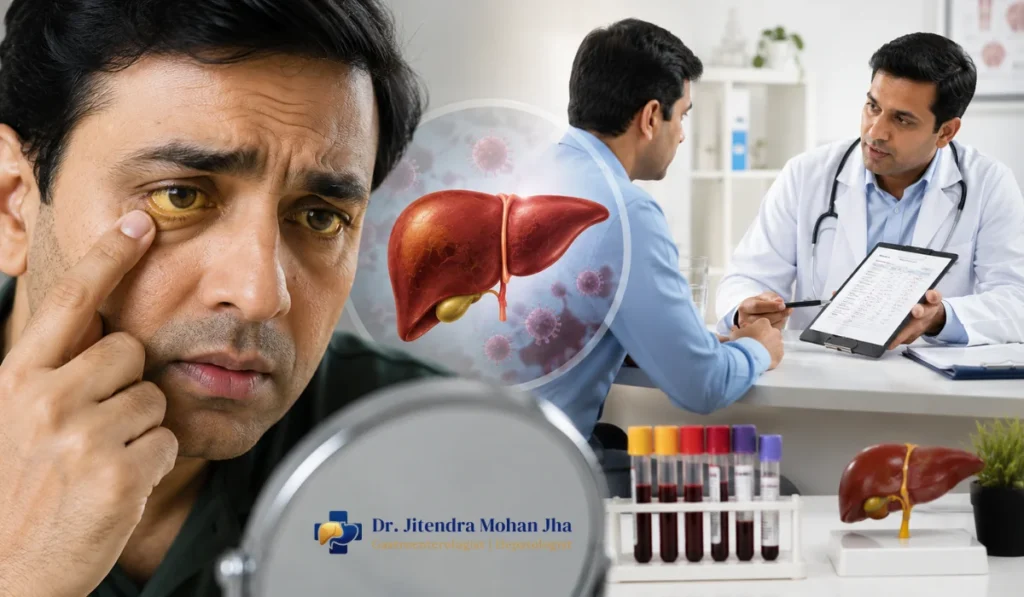
If you or someone in your family has noticed yellowing of the skin or eyes, the first question on your mind is probably simple: can this be treated, and how serious is it? That’s exactly what we’ll answer here, clearly and honestly.
Here’s the most important thing to understand before anything else: jaundice itself is not a disease you treat directly. It’s a visible sign that bilirubin, a yellow pigment produced when red blood cells break down, has built up in your blood. Treatment always targets whatever is causing that buildup, not the yellow color itself. Once the underlying issue is addressed, the jaundice resolves on its own.
The good news is that in adults, the cause can almost always be identified through blood tests and imaging, and most causes are manageable once found.
What Is Jaundice and Why It Happens in Adults
Jaundice becomes visible once bilirubin levels rise above roughly 2 to 3 mg/dL in the blood, against a normal range that is usually under 1.2 mg/dL. Normally, your liver processes bilirubin and sends it out through bile into the digestive tract. When something disrupts this process, bilirubin builds up and starts showing in your skin and eyes.
Adult jaundice is different from the jaundice seen in newborns. In babies, mild jaundice is often a normal, temporary part of their liver adjusting after birth. In adults, jaundice is essentially always a sign of an underlying medical issue and needs proper evaluation.
Also Read: When Does Acid Reflux Become GERD?
Adult Jaundice Causes: Why Identifying the Cause Comes First
Adult jaundice causes generally fall into three categories, and knowing which one applies to you is the real starting point for treatment:
Pre-hepatic causes – Red blood cells breaking down faster than normal (hemolysis), producing more bilirubin than the liver can process in time.
Hepatic causes – The liver itself is damaged or inflamed and cannot process bilirubin properly. Common examples include viral hepatitis, alcohol-related liver disease, fatty liver disease, and cirrhosis.
Post-hepatic causes – Bile flow is physically blocked after leaving the liver, most often due to gallstones or a narrowing in the bile duct.
Each of these needs a different treatment approach, which is exactly why doctors don’t prescribe something for “jaundice” before running tests.
Is There Any Treatment for Jaundice in Adults?
There is no single medicine that cures jaundice on its own. Your doctor treats the condition causing the bilirubin buildup, and the jaundice fades as that condition improves. Here’s how treatment typically breaks down by cause:
Viral hepatitis – Most acute cases are managed with rest, hydration, and supportive care while the liver heals. Chronic hepatitis B or C may require specific antiviral medication based on test results and viral load.
Gallstones or a blocked bile duct – This usually needs a procedure called ERCP to clear the obstruction, or in some cases, surgery to remove the gallbladder.
Alcohol-related liver disease – Complete alcohol cessation is the single most important step, alongside nutritional support and monitoring liver function.
Hemolytic causes – Since bilirubin is building up because red blood cells are being destroyed faster than the liver can clear them, the actual treatment addresses the blood condition responsible for this, rather than the bilirubin itself.
Itching, a common accompanying symptom caused by bile salts in the skin, is managed separately with specific medication and doesn’t necessarily reflect how quickly bilirubin levels are improving. In select cholestatic cases, doctors may also prescribe ursodeoxycholic acid to help improve bile flow, though this is decided case by case, not used routinely.
So, to directly answer “is there a cure for jaundice”: yes, in the sense that treating the root cause resolves it, but there is no standalone cure for jaundice as a symptom on its own.
You May Like: What are the Super Foods for the Liver?
Does Jaundice Always Need Hospitalization?
Not always. Mild jaundice from a resolving viral infection, with normal liver function and no warning signs, is often managed at home with rest, hydration, and follow-up blood tests to track bilirubin levels. Hospitalization becomes necessary when bilirubin levels are very high, liver function tests show significant abnormality, there are signs of confusion or bleeding, or the cause requires a procedure like ERCP or surgery for a blocked bile duct. Your doctor decides this based on test results, not on how yellow the skin appears.
Jaundice Recovery Time: What to Realistically Expect
Jaundice cannot typically clear up in just a few days. For mild jaundice from a resolving viral infection, visible yellowing often starts improving within one to two weeks, but bilirubin levels usually take several weeks to fully return to normal. Recovery time depends heavily on the cause: jaundice from a bile duct blockage can improve within days of the procedure clearing it, while liver inflammation or alcohol-related damage takes longer to heal. If jaundice hasn’t improved within two weeks, get it re-evaluated rather than waiting further.
Read More: When Should You See a Gastroenterologist? Signs You Should Not Ignore
Diet During Jaundice Recovery
Diet does not treat the underlying cause, but it supports the liver as it recovers. Avoid alcohol completely, along with fried and oily foods, excess fat, red meat, processed foods, high salt, and excessive sugar. Favor light, easily digestible meals, fresh fruits and vegetables, and plenty of fluids. No diet chart replaces treating the actual cause of jaundice.
When Jaundice in Adults Needs Urgent Attention
Seek medical care right away if you notice: rapidly worsening yellowing, confusion or excessive drowsiness, high fever with jaundice, severe abdominal pain, dark urine with pale or clay-colored stools, or vomiting blood. These can indicate a more serious issue, such as acute liver failure or a significant bile duct obstruction.
Getting Diagnosed: What to Expect
Your doctor will typically begin with a set of blood tests: total and direct bilirubin to see how the buildup is occurring, liver function tests to check how well the liver is working, and a complete blood count to rule out excess red blood cell breakdown as the cause.
We see many patients in Patna who notice yellowing but wait, assuming it will resolve on its own. This delay can mean the underlying cause goes untreated longer than necessary. Getting evaluated for jaundice treatment in Patna early makes it far easier to identify the exact cause and start the right treatment before complications build up. If you are looking for a reliable liver specialist in Patna, timely testing is the most useful first step.
If yellowing of the skin or eyes keeps appearing, or comes along with dark urine, pale stools, persistent fatigue, abdominal pain, fever, or unexplained weight loss, do not wait and assume it will pass on its own. For proper evaluation and treatment guidance, call +919942728701 to book an appointment with Dr. Jitendra Mohan Jha, one of the best liver doctors in Patna and a trusted choice for patients searching for the best gastroenterologist in Patna for liver, stomach, and digestive problems.
Conclusion
Jaundice in adults always signals that something needs medical attention. The reassuring part is that once the cause is identified, whether viral hepatitis, a gallstone blockage, alcohol-related liver damage, or a blood condition, there is a clear treatment path for each. Recovery takes weeks, not days, and progress should be tracked through follow-up bilirubin testing rather than by how the skin looks.
If you are dealing with new or ongoing jaundice, book a consultation with one of the best liver doctors in Patna to get the right tests done and start treatment for the actual cause. You can also reach out to the best gastroenterologist in Patna for a complete evaluation if jaundice comes with other digestive symptoms.
Read More: Pain in the Left Side of the Lower Abdomen: Gas, Constipation, or Something Else?
Frequently Asked Questions
1. Is there any permanent treatment for jaundice in adults?
Jaundice resolves once the underlying cause is properly treated. There is no separate permanent treatment for jaundice itself.
2. Can jaundice go away on its own without treatment?
Very mild cases linked to a resolving viral infection may improve with rest and supportive care, but most adult jaundice needs proper diagnosis and treatment of the underlying cause.
3. Does jaundice always require hospitalization?
No. Mild cases with normal liver function can often be managed at home with monitoring. Hospitalization is needed for high bilirubin levels, significant liver abnormality, or causes requiring a procedure.
4. What foods should be avoided during jaundice?
Alcohol, fried and oily foods, excess fat, processed foods, high salt, and excessive sugar should be avoided while the liver recovers.
5. How long does jaundice take to fully recover in adults?
Mild jaundice may start improving within one to two weeks, but full bilirubin normalization often takes several weeks, depending on the underlying cause.
6. When should I see a doctor for jaundice?
See a doctor as soon as jaundice is noticed, and seek urgent care if it worsens quickly or comes with confusion, fever, severe abdominal pain, or vomiting blood.