
Many people start thinking about liver health after an ultrasound shows fatty liver or a liver function test reports raised SGPT, SGOT, bilirubin, or GGT. Some patients also worry because they feel tired, have poor appetite, acidity, bloating, weight gain, diabetes, high cholesterol, or a history of alcohol use.
At Dr. Jitendra Mohan Jha Liver & Gastro Clinic, we often explain one important point: improving liver health naturally does not mean depending on detox drinks, herbal powders, liver tonics, or one miracle food. The liver needs consistent daily habits that reduce extra fat, sugar load, alcohol burden, unnecessary medicines, and weight-related pressure on the body.
In many patients, liver health can improve when the problem is detected early and managed properly. But natural methods should be used in the right way. If liver reports are abnormal, or fatty liver is seen on ultrasound, the first step is to understand the reason rather than trying random home remedies.
Can you make your liver healthy again naturally?
The liver has a strong ability to recover in many situations, especially when the damage is at an early stage. Fatty liver related to weight gain, high sugar intake, diabetes, high triglycerides, alcohol, or low physical activity may improve with the right lifestyle changes.
However, the result depends on the cause and stage of liver disease. Early fatty liver is very different from advanced fibrosis, cirrhosis, hepatitis B, hepatitis C, autoimmune liver disease, bile duct blockage, or medicine-related liver injury. These conditions need proper medical evaluation and treatment.
If you are searching for how to make liver healthy again, focus on these basics first:
- Gradual weight loss if you are overweight
- Regular walking or exercise
- Better control of diabetes, cholesterol, thyroid, and blood pressure
- Reduced sugar, sweets, and refined carbohydrates
- Avoiding alcohol if advised
- Avoiding unnecessary painkillers, herbal supplements, and liver tonics
- Follow-up tests as recommended by your doctor
Crash diets are not safe. Losing weight too quickly can be difficult to maintain and may create other health problems. A steady plan that fits your routine works better than a strict diet that you follow for a few days and then leave.
Natural ways to improve liver function are helpful only when they are practical and consistent. If reports are abnormal, natural care should go together with proper diagnosis and follow-up.
Best diet for liver health: what should your plate look like?
The best diet for liver health is not about eating one special superfood. It is about building a meal pattern that helps control weight, sugar, cholesterol, and liver fat.
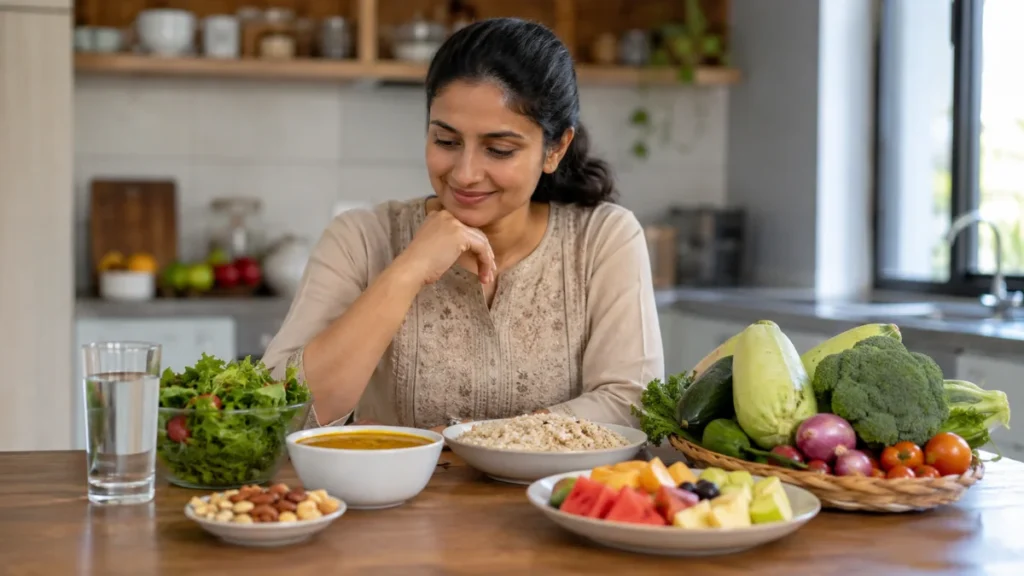
A simple liver-friendly plate can look like this:
- Half plate: vegetables or salad, if tolerated
- One-fourth plate: protein such as dal, chana, curd, egg, fish, paneer in moderation, or lean chicken
- One-fourth plate: roti, rice, dalia, oats, or millet in controlled quantity
- Small portion: nuts, seeds, or healthy oil
- Drink: water, chaas, or an unsweetened beverage
This kind of balanced plate helps reduce overeating of rice, roti, fried snacks, sweets, and heavy curries. It also supports better digestion and weight control, which are important for fatty liver management.
For many Indian patients, the biggest issue is not only what they eat, but also how much they eat and when they eat. Large dinners, late-night meals, frequent sweets, fried snacks, sugary tea, cold drinks, and low physical activity can all increase liver fat over time.
A fatty liver diet should not be extreme. You do not need to stop all carbohydrates completely. Instead, reduce excess portions and choose better options. For example, controlled portions of roti, dalia, oats, millets, or rice may be used depending on your health condition, activity level, diabetes status, and weight goals.
Foods for healthy liver
Foods for healthy liver are usually simple, everyday foods. They work best when they replace unhealthy choices instead of being added on top of an already heavy diet.
You can include fresh vegetables in daily meals, especially leafy greens, gourds, beans, cabbage, methi, saag, and seasonal vegetables that suit your digestion. These foods add fiber, make meals lighter, and help reduce excess calorie intake.
Whole grains and high-fiber foods may also support liver health. Options such as oats, dalia, barley, whole wheat roti, brown rice in controlled quantity, and millets can be better than refined flour or heavily processed foods. Portion size still matters, especially for patients with diabetes, obesity, or fatty liver.
Plant-based protein and fiber sources such as lentils, chickpeas, cooked beans, sprouts, and similar home-style foods can make meals more filling and bowel-friendly. Protein also helps reduce repeated snacking when used properly in meals.
Fruits can be included, but whole fruit is better than fruit juice. Fruit juice removes much of the fiber and can add too much sugar quickly. Papaya, apple with skin, guava, orange, pear, and berries may be used in controlled portions, depending on diabetes and calorie needs.
Nuts and seeds can be useful in small quantities. Almonds, walnuts, flaxseeds, chia seeds, pumpkin seeds, and sunflower seeds provide healthy fats and fiber, but they are calorie-dense. A small portion is enough.
Unsweetened coffee may support liver health in some people, but it is not a treatment for liver disease. Sugar-loaded coffee, cold coffee, cream-heavy coffee, and excess caffeine are not liver-friendly choices. Patients with acidity, palpitations, sleep problems, pregnancy-related restrictions, or uncontrolled blood pressure should be careful with caffeine.
What foods and habits should you avoid for better liver health?
Improving liver health is not only about adding healthy foods. It is equally important to reduce the foods and habits that increase liver fat, inflammation, sugar imbalance, and weight gain.
Common foods and habits to reduce or avoid include:
- Alcohol, especially if fatty liver, hepatitis, raised liver enzymes, or cirrhosis is present
- Cold drinks, packaged juices, energy drinks, and sweetened beverages
- Sweets, cakes, biscuits, desserts, and sugar-heavy snacks
- Deep-fried foods such as samosa, pakora, chips, puri, and kachori
- Refined flour foods like white bread, noodles, pizza base, naan, and bakery items
- Reused frying oil, vanaspati, and trans-fat-rich foods
- Frequent red meat, processed meat, and very oily meat preparations
- Late-night heavy meals
- Random herbal supplements, liver detox powders, and unverified liver tonics
- Unnecessary painkillers or self-medication
Many patients say, “I do not drink alcohol, so my liver should be fine.” This is not always true. Non-alcoholic fatty liver can develop due to excess calories, belly fat, diabetes, high triglycerides, poor diet, and low physical activity.
Fruit juice is another common mistake. Whole fruit in controlled portions is usually better than juice because juice can increase sugar intake quickly and does not provide the same fiber benefit. This is especially important for patients with fatty liver, diabetes, obesity, or high triglycerides.
Natural ways to improve liver function
Natural ways to improve liver function work best when they are simple enough to follow regularly. The goal is to reduce pressure on the liver and improve overall metabolic health.
Useful steps include:
- Lose weight gradually if you are overweight
- Walk or exercise regularly
- Reduce sugar, sweets, and refined carbohydrates
- Avoid alcohol if your doctor has advised it
- Control diabetes, cholesterol, thyroid, and blood pressure
- Sleep on time and avoid late-night heavy meals
- Avoid unnecessary medicines, painkillers, and supplements
- Repeat LFT, ultrasound, FibroScan, or other tests as advised
- Do not follow crash diets
- Do not depend on detox drinks for liver recovery
Even a small weight reduction can help many patients with fatty liver when it is done safely and consistently. Regular walking, portion control, and reducing sugary or fried foods can slowly reduce liver fat in many early cases.
If your liver enzymes are high, do not assume that diet alone will solve the problem. Raised SGPT, SGOT, bilirubin, or GGT can occur due to fatty liver, alcohol, viral hepatitis, gallbladder or bile duct problems, medicines, autoimmune disease, or other liver conditions. The correct cause should be checked before deciding the treatment plan.
Is a fatty liver diet different from a general healthy diet?
A fatty liver diet is not a starvation diet. It is a structured, balanced eating pattern that helps reduce liver fat, body weight, sugar load, and triglyceride levels. It is similar to a healthy diet, but it needs more attention to portion size, sugar intake, alcohol, refined carbohydrates, and meal timing.
A practical fatty liver diet should focus on:
- More vegetables in lunch and dinner
- Protein in each main meal, if suitable
- Controlled rice or roti portions
- Less sugar, sweets, and sweet drinks
- Fewer fried and packaged snacks
- Whole fruit instead of fruit juice
- Earlier and lighter dinner
- Regular walking or physical activity
- Reduced alcohol or complete avoidance if advised
- Follow-up tests to track improvement
Patients should avoid extreme diet plans. Skipping meals and then overeating later can disturb sugar balance and make weight control harder. Similarly, stopping all carbohydrates suddenly is difficult for most people and may not be required.
For many patients in Patna, fatty liver is commonly seen along with irregular food timing, high intake of rice or sweets, fried evening snacks, diabetes, high cholesterol, low walking, or increased belly fat. A practical plan should match the patient’s routine, work schedule, food habits, and medical condition.
Are liver detox drinks or supplements useful?
Many people search for liver detox drinks, liver cleansing foods, or natural detox remedies. This is understandable, but it is important to know that the liver does not need a special detox drink to do its work.
Detox drinks, powders, herbal mixtures, and liver tonics are not a proven replacement for proper liver care. Some herbal or unregulated supplements may even harm the liver, especially if taken in high doses or combined with other medicines.
Lemon water, green tea, vegetable juice, or herbal drinks may be used as part of a healthy lifestyle if they suit you, but they cannot reverse liver disease on their own. They should not be used to avoid medical evaluation when liver reports are abnormal.
The safer way to support the liver is through balanced meals, weight control, regular physical activity, avoiding alcohol when advised, controlling diabetes and cholesterol, and checking the cause of abnormal liver reports.
If your ultrasound shows fatty liver, your LFT is abnormal, or FibroScan suggests liver stiffness, do not depend only on home remedies. Proper evaluation is important to understand whether the issue is simple fatty liver, inflammation, fibrosis, hepatitis, alcohol-related damage, bile duct disease, or another condition.
When should you see a liver specialist?
Natural liver care is useful, but it is not enough in every situation. Some liver problems need proper testing, monitoring, and treatment. If you already have abnormal reports or warning symptoms, delaying evaluation can increase the risk of complications.
You should consult a liver or gastro specialist if you have:
- Yellow eyes or yellow urine
- Abnormal liver function test report
- High SGPT, SGOT, bilirubin, or GGT
- Fatty liver on ultrasound
- FibroScan showing liver stiffness or fibrosis
- Low platelet count with liver disease
- Swelling in the abdomen or legs
- Vomiting blood
- Black stool
- Severe tiredness that does not improve
- Loss of appetite for many days
- Unexplained weight loss
- Confusion, excessive sleepiness, or behavior changes
- Long-term alcohol use
- Hepatitis B or hepatitis C
- Fatty liver with diabetes, obesity, thyroid disease, or high cholesterol
Fatty liver is common, but it should not always be taken casually. In some patients, it may remain mild. In others, it may slowly progress to inflammation, fibrosis, or cirrhosis, especially when diabetes, obesity, high triglycerides, alcohol use, or abnormal liver enzymes are present.
If your liver report is abnormal, the right step is not to start random liver supplements. The safer approach is to understand why the report is abnormal and then follow a treatment plan based on the cause.
How we evaluate liver health at Dr. Jitendra Mohan Jha Liver & Gastro Clinic
At Dr. Jitendra Mohan Jha Liver & Gastro Clinic, liver evaluation is planned according to the patient’s symptoms, reports, risk factors, and overall health condition. The aim is to understand whether the concern is simple fatty liver, liver inflammation, viral hepatitis, alcohol-related liver disease, bile duct problem, medicine-related liver injury, or another liver condition.
Evaluation may include:
- Review of symptoms such as jaundice, tiredness, abdominal swelling, appetite loss, vomiting, black stool, or weight loss
- Review of diet, weight, alcohol intake, diabetes, thyroid, cholesterol, and blood pressure
- Medicine and supplement history
- Physical examination
- Liver function test report review
- Ultrasound report review
- Viral hepatitis testing when required
- FibroScan if fatty liver, stiffness, or fibrosis assessment is needed
- Additional tests based on the patient’s clinical condition
Not every patient needs every test. The required investigations depend on symptoms, age, examination findings, medical history, risk factors, and previous reports.
Many patients visit with only one concern, such as fatty liver on ultrasound or raised SGPT. But liver evaluation should not look at one number alone. The full picture matters, including weight, sugar control, cholesterol, alcohol intake, medicines, family history, and other symptoms.
Appointment
If your ultrasound shows fatty liver, your liver function test is abnormal, or you have symptoms such as yellow eyes, dark urine, abdominal swelling, unexplained tiredness, loss of appetite, black stool, vomiting blood, or long-term digestion problems, do not depend only on home remedies or liver detox products.
For proper liver evaluation and treatment guidance, call +919942728701 to book an appointment with Dr. Jitendra Mohan Jha Liver & Gastro Clinic. Dr. Jitendra Mohan Jha is one of best liver doctors in Patna and a trusted choice for patients searching for a TOP gastroenterologist in Patna for liver, stomach, and digestive problems.
Conclusion
Improving liver health naturally is possible in many patients, especially when fatty liver or early liver changes are detected on time. But natural improvement does not come from one superfood, a 7-day detox plan, or random liver tonic. It comes from daily habits that reduce pressure on the liver.
The most useful steps include eating balanced meals, reducing sugar and fried foods, walking regularly, maintaining a healthy weight, avoiding alcohol if advised, controlling diabetes and cholesterol, and avoiding unnecessary medicines or supplements.
A healthy liver plan should be practical and long-term. If your liver reports are normal and you want prevention, lifestyle correction can help. But if your LFT is abnormal, ultrasound shows fatty liver, FibroScan shows stiffness, or you have symptoms like jaundice, swelling, black stool, vomiting blood, or unexplained weakness, proper medical evaluation should not be delayed.
FAQs
1. How can I improve my liver health naturally?
You can support liver health naturally by eating balanced meals, reducing sugar and fried foods, walking regularly, maintaining a healthy weight, avoiding alcohol if advised, controlling diabetes and cholesterol, and avoiding unnecessary medicines or supplements.
2. How can I make my liver healthy again?
The liver can improve in many patients when fatty liver or early liver changes are detected on time. Weight control, healthy diet, exercise, alcohol avoidance, and follow-up tests can help. Advanced liver disease needs proper medical care.
3. What foods are good for liver health?
Foods for healthy liver may include fresh vegetables, whole grains, dal, beans, sprouts, curd, fruits in controlled portions, nuts, seeds, lean protein, and unsweetened drinks. The exact diet may vary if the patient has diabetes, cirrhosis, kidney disease, or swelling.
4. What is the best diet for liver health?
The best diet for liver health is a balanced diet that includes vegetables, protein, whole grains in controlled quantity, healthy fats in small portions, and less sugar, fried food, refined flour, alcohol, and processed food.
5. Can fatty liver be reduced naturally?
Fatty liver can improve in many patients with gradual weight loss, regular walking, reduced sugar and refined carbohydrates, diabetes control, cholesterol control, and alcohol avoidance. Follow-up with LFT, ultrasound, or FibroScan may be needed.
6. Are liver detox drinks useful?
Liver detox drinks are not a proven treatment for liver disease. Some supplements or herbal products may even harm the liver. If your liver reports are abnormal, it is safer to identify the cause and follow medical advice.