
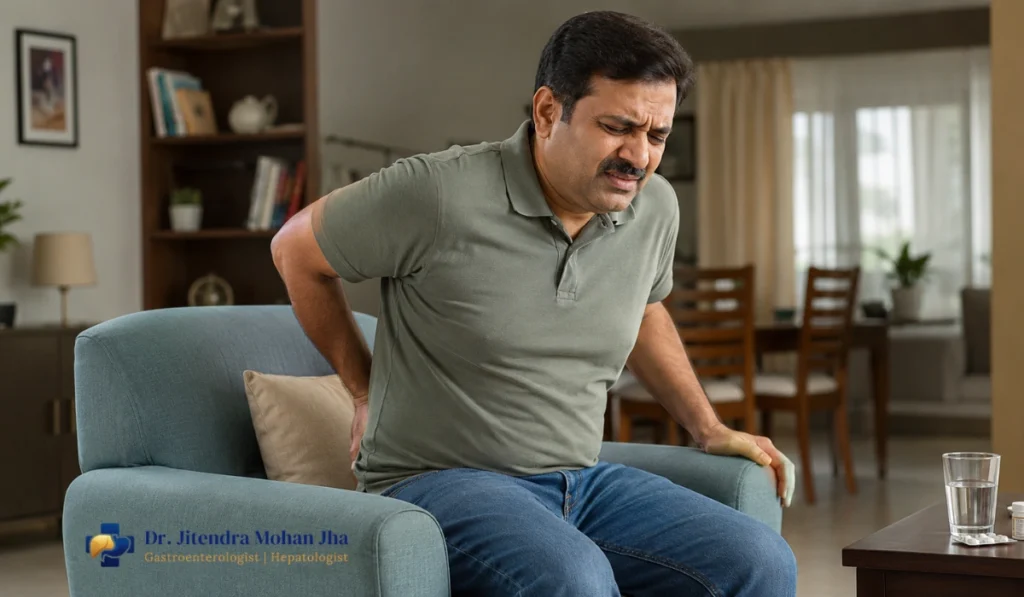
Piles can affect daily life more than many people expect. Sitting for long hours, passing stool, travelling, working, or sleeping comfortably may become difficult when symptoms keep returning. Some patients notice fresh blood during stool, while others struggle with pain, itching, swelling, mucus discharge, or a lump near the anus.
Many people delay consultation because they feel embarrassed or assume piles will settle on their own. Mild symptoms may improve with stool softening, better food habits, water intake, and avoiding straining. But repeated bleeding, pain, swelling, prolapse, or discomfort while sitting should not be ignored.
Piles treatment works best when the actual problem is checked properly. The type of piles, severity of symptoms, bowel habits, bleeding pattern, and warning signs all matter before deciding the right treatment.
What are piles, and why do they happen?
Piles, also called hemorrhoids, are swollen blood vessels in or around the anal canal and lower rectum. They may be internal or external.
Internal piles usually develop inside the rectum. They may cause fresh red bleeding during stool, mucus discharge, or a lump that comes out during bowel movement. External piles develop near the anal opening and may cause pain, swelling, itching, irritation, or difficulty sitting.
Piles often develop when pressure increases around the anal area. This may happen due to chronic constipation, hard stool, repeated straining, low fiber intake, inadequate water intake, long toilet sitting, pregnancy, obesity, heavy lifting, long sitting hours, age-related tissue weakness, or repeated loose motions in some patients.
Constipation and piles are closely connected. Hard stool makes a person strain more, and repeated straining can worsen swelling around the anus. This is why piles treatment should not focus only on creams or temporary pain relief. Bowel habit correction is also important.
Read More: Is There Any Treatment for Jaundice in Adults?
Common symptoms of piles
Piles symptoms can vary from patient to patient. Some people have bleeding without pain. Others may have severe pain, itching, swelling, or difficulty sitting.
Common symptoms include:
- Fresh red blood after passing stool
- Blood on toilet paper or drops in the toilet pan
- Pain during or after bowel movement
- Itching or burning around the anus
- Swelling or lump near the anal opening
- Mucus discharge
- Feeling of incomplete stool passage
- Discomfort while sitting
- Irritation after passing stool
- Repeated constipation or straining
Fresh bleeding during stool is often linked with piles, but it should not always be assumed to be piles. Rectal bleeding can also happen due to fissures, infections, colitis, polyps, inflammatory bowel disease, or other colon and rectal conditions.
If bleeding happens more than once, keeps returning, or appears with weakness, weight loss, black stool, abdominal pain, anemia, or bowel habit changes, proper medical evaluation is needed.
Read This: When Should You See a Gastroenterologist? Signs You Should Not Ignore
When can home care help?
Home care may help when piles symptoms are mild, recent, and not linked with warning signs. The main goal is to soften stool and reduce straining.
Helpful steps include:
- Increase fiber slowly through vegetables, fruits, dal, whole grains, and similar fiber-rich foods
- Drink enough water throughout the day
- Do not spend unnecessary time sitting on the toilet, as it can increase pressure around the anal area.
- Do not strain during stool passage
- Do not hold stool repeatedly
- Walk regularly
- Treat constipation early
- Avoid very spicy, fried, and low-fiber foods if they worsen symptoms
- Take a warm sitz bath if there is local discomfort
- Use creams, suppositories, or medicines only as advised
Fiber should be increased gradually. A sudden increase in fiber may cause gas, bloating, or abdominal discomfort in some patients. Water intake is also important because fiber works better when the body has enough fluids.
Home care should not continue for weeks if bleeding, pain, swelling, or irritation keep returning. Repeated symptoms need evaluation because the cause may not be simple piles, or the piles may need active treatment.
When should you consider piles treatment?
You should consider piles treatment when symptoms start affecting your comfort, bowel routine, confidence, or daily activities. Treatment does not always mean surgery. Many patients improve with bowel correction, medicines, and minor procedures when suitable.
Treatment should be considered if:
- Bleeding happens repeatedly
- Pain affects sitting, walking, or toilet use
- A lump comes out during stool passage
- Swelling near the anus keeps returning
- Itching or irritation does not settle
- Symptoms return despite home care
- Constipation and straining are frequent
- You need creams, laxatives, or pain medicines again and again
- You feel afraid to pass stool because of pain or bleeding
- Piles interfere with work, travel, sleep, or routine activities
The right time to seek medical advice is when symptoms are no longer occasional or mild. A proper check-up can help decide whether simple treatment is enough or whether procedure-based care is needed.
Also Read: What are the Super Foods for the Liver?
Warning signs that need medical evaluation
Piles are common, but bleeding, pain, swelling, and itching should not be treated casually every time. Similar symptoms may occur due to fissure, abscess, infection, colitis, polyps, inflammatory bowel disease, or other bowel conditions.
Consult a doctor if you have:
- Rectal bleeding more than once
- Heavy bleeding during or after stool
- Black stool
- Severe anal pain
- Painful swelling near the anus
- Fever with anal pain or swelling
- Pus discharge
- Unexplained weight loss
- Weakness, tiredness, or suspected anemia
- Change in bowel habits
- New bleeding after middle age
- Family history of colon cancer or inflammatory bowel disease
- Constipation or diarrhea that keeps returning
Urgent medical care may be needed if bleeding is heavy, pain is severe, swelling is sudden, fever is present, or the patient feels dizzy or faint. Black stool, repeated vomiting, or severe abdominal pain should also be checked quickly.
How piles are evaluated
A piles consultation focuses on understanding symptoms, bowel habits, bleeding pattern, and severity. During evaluation, the doctor may review symptoms such as pain while passing stool, hard stool, constipation, loose motions, repeated straining, time spent in the toilet, anal swelling, itching, mucus, current medicines, food habits, water intake, age, past health issues, and any family history of bowel disease.
A local examination may be needed to understand whether the symptoms are due to piles, fissure, swelling, infection, or another anal condition. In selected cases, digital rectal examination, proctoscopy, or anoscopy may be advised.
Blood tests may be needed if bleeding is repeated or anemia is suspected. Colonoscopy is not required for every piles patient. It may be advised when there is repeated bleeding, anemia, unexplained weight loss, bowel habit changes, family history, new bleeding after middle age, or other warning signs.
You May Like: When Does Acid Reflux Become GERD?
Piles treatment options
Piles treatment depends on whether the piles are internal or external, how severe the symptoms are, whether bleeding or prolapse is present, and whether constipation or straining is worsening the condition.
1. Diet and bowel habit correction
This is usually the first step. The aim is to make stool softer and reduce pressure during bowel movement. Patients may be advised to increase fiber, drink enough water, walk regularly, avoid straining, avoid long sitting on the toilet, correct constipation early, and maintain a regular bowel routine.
In mild cases, pain and bleeding may reduce when constipation improves. If symptoms keep returning, diet correction alone may not be enough.
2. Medicines
Medicines may be used depending on symptoms. These may include stool softeners, fiber supplements, pain relief medicines, local creams, or suppositories in selected patients.
Medicines can reduce pain, itching, swelling, and hard stool, but repeated use without diagnosis is not a good approach. Temporary relief should not replace proper evaluation when symptoms keep returning.
3. Office-based treatment
Some internal piles can be treated with office-based procedures when medicines and bowel correction are not enough. Rubber band ligation may be considered in selected internal piles. Patients searching for a top banding for piles doctor in Patna should first get a proper evaluation, because banding is suitable only for selected cases.
4. Surgery in selected cases
Surgery may be considered for severe, recurrent, prolapsed, painful, or complicated piles. It may also be considered when other treatment options do not give enough relief or when piles symptoms start disturbing routine activities. The decision should be made after examination, not just based on symptoms described online.
Also Read: Pain in the Left Side of the Lower Abdomen: Gas, Constipation, or Something Else?
Can piles be treated without surgery?
Many mild or early piles cases can improve without surgery when constipation, hard stool, and straining are corrected. Non-surgical treatment may include fiber-rich food, adequate water intake, stool softeners when required, prescribed medicines, warm sitz baths, avoiding long toilet sitting, and office-based procedures for suitable internal piles.
However, non-surgical treatment does not mean ignoring the problem. If bleeding keeps returning, the lump comes out repeatedly, pain is severe, or symptoms affect daily routine, medical evaluation is important.
Read This: What Are the Treatments for Constipation?
Piles Treatment in Patna: When to Get Checked and What Treatment May Be Needed
Patients looking for piles treatment in Patna should first focus on correct diagnosis before choosing any cream, medicine, banding procedure, or surgery. Blood in stool is often linked with piles, but repeated bleeding can also happen due to fissures, colitis, polyps, inflammation, or other bowel conditions. That is why symptoms should be evaluated properly instead of assuming the cause.
At Dr. Jitendra Mohan Jha Gastro & Liver Clinic, piles-related symptoms are assessed along with bowel habits, stool pattern, bleeding history, constipation, pain, age, and warning signs. This helps decide whether the patient needs dietary changes, medicines, office-based treatment, colon evaluation, or referral for surgical care in selected cases.
If piles are causing repeated bleeding, pain, itching, swelling, discomfort while sitting, constipation, or fear of passing stool, do not keep depending only on creams or home remedies. Mild symptoms may improve with fiber-rich food, enough water, stool softening, walking, and avoiding straining, but repeated or worsening symptoms need proper medical attention.
For evaluation and treatment guidance, call +919942728701 to book an appointment with Dr. Jitendra Mohan Jha Gastro & Liver Clinic. He is a trusted choice for patients searching for a Top gastroenterologist in Patna for piles, constipation, bleeding, and digestive problems. A timely check-up can help find the real reason behind the symptoms and guide the most suitable treatment according to the patient’s overall condition.
FAQs
1. When should I consider treatment for piles?
You should consider piles treatment if bleeding, pain, itching, swelling, prolapse, or discomfort while sitting keeps coming back or does not improve with bowel correction.
2. Can piles be treated without surgery?
Many mild piles cases can improve without surgery through fiber-rich food, water, stool softeners, medicines, sitz baths, and avoiding straining. Some internal piles may need office-based procedures.
3. Does blood during bowel movements always mean piles?
No. Bleeding may happen due to piles, fissures, infection, colitis, polyps, inflammatory bowel disease, or other colon and rectal conditions. Repeated bleeding should be checked.
4. What makes piles worse?
Hard stool, chronic constipation, repeated straining, long toilet sitting, low fiber intake, less water intake, obesity, pregnancy, heavy lifting, and long sitting hours may worsen piles.
5. Which doctor should I visit for piles?
You can visit Dr. Jitendra Mohan Jha for piles-related symptoms like bleeding, constipation, pain during stool, or mucus discharge. He is a qualified gastroenterologist with MBBS (Honours), DNB, DrNB Gastroenterology, and MRCP (London), experienced in stomach, intestine, liver, and bowel-related conditions.
6. When are piles symptoms urgent?
Seek urgent medical care for heavy bleeding, severe anal pain with swelling, fever, pus discharge, dizziness, fainting, black stool, repeated vomiting, or severe abdominal pain.