
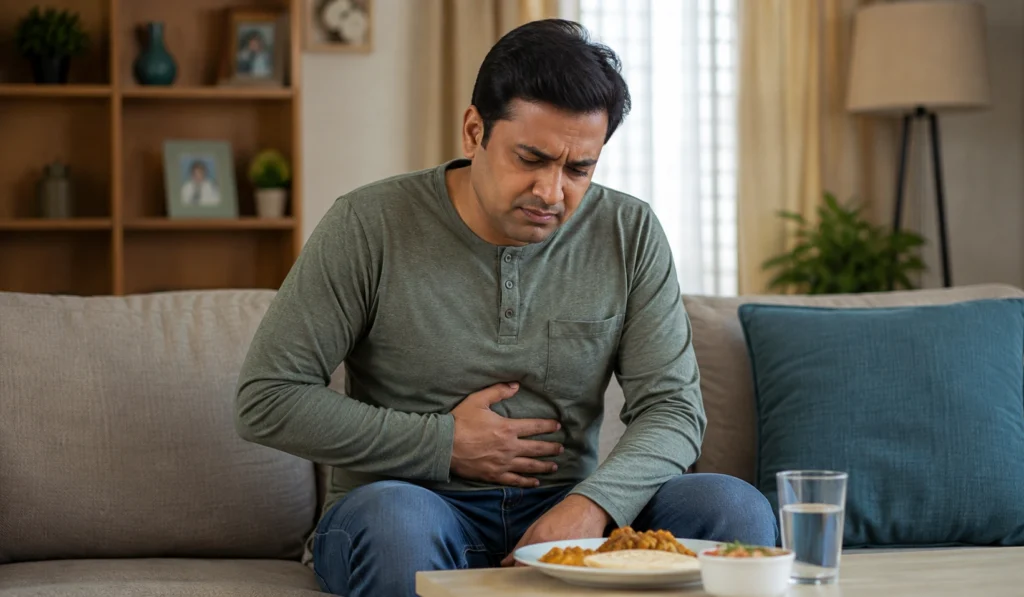
Gas, acidity, bloating, constipation, loose motion, stomach pain, tiredness, and appetite changes are common, but they should not always be ignored. If these symptoms happen occasionally after heavy food, irregular meals, or stress, they may settle with simple lifestyle correction. But when they keep returning, disturb sleep, affect eating, or appear with abnormal reports, they need proper evaluation.
Gut health and liver health are closely connected. The gut digests food and absorbs nutrients, while the liver processes those nutrients, produces bile, supports digestion, and helps the body handle harmful substances. That is why some stomach, intestine, gallbladder, pancreas, and liver-related problems may show overlapping symptoms.
For example, a patient may have repeated acidity with fatty liver. Another may have constipation, bloating, and abnormal liver function tests. Some patients may not feel any major discomfort but still show fatty liver on ultrasound. The important point is that repeated symptoms should not be treated only with antacids, laxatives, digestion powders, or home remedies without understanding the cause.
How gut health and liver health are connected
The digestive system and liver work together every day. Food passes through the stomach and intestines, nutrients are absorbed, and the liver helps process them. The liver also produces bile, which helps digest fats. If diet, weight, alcohol intake, diabetes, cholesterol, or medicines affect this system, both digestion and liver health may suffer.
Poor food habits, excess body weight, high triglycerides, diabetes, alcohol use, and low physical activity can increase the risk of fatty liver and digestive discomfort. Some patients may feel bloating, acidity, heaviness after meals, or irregular stools. Others may have no clear symptoms but may show abnormal LFTs or fatty liver on ultrasound.
This is why repeated digestive symptoms should be evaluated properly. The cause may be related to acidity, GERD, gastritis, IBS, constipation, infection, fatty liver, gallbladder disease, pancreas-related problems, or another digestive condition.
Read This: When Should You See a Gastroenterologist? Signs You Should Not Ignore
Digestive symptoms patients should not ignore
Digestive symptoms may look minor in the beginning, but the pattern matters. Occasional gas or acidity after overeating may not be serious. However, symptoms that keep coming back, become severe, or appear with warning signs need medical attention.
Patients should be careful if they notice:
- Frequent acidity, heartburn, or sour burps
- Bloating after most meals
- Constipation lasting for weeks
- Loose motion that keeps returning
- Abdominal pain or cramps
- Nausea or repeated vomiting
- Blood in stool or black stool
- Mucus in stool
- Sudden change in bowel habits
- Loss of appetite
- Unexplained weight loss
- Weakness or anemia
These symptoms can have different causes. Acidity may happen due to GERD, gastritis, ulcer-related problems, medicines, or food habits. Bloating may be linked to constipation, IBS, food intolerance, slow digestion, or infection. Blood in stool may be due to piles or fissures, but it can also happen due to colitis, polyps, or other bowel conditions.
So, instead of only asking how to stop the symptom today, patients should ask why the symptom keeps coming back.
Also Read: What are the Super Foods for the Liver?
Liver symptoms may be silent at first
Liver problems do not always cause clear symptoms in the early stage. Fatty liver is often found during an ultrasound done for another reason. Raised SGPT, SGOT, bilirubin, or GGT may also be detected on routine blood tests before the patient feels anything serious.
Some patients may feel tiredness, poor appetite, nausea, abdominal heaviness, bloating, or weakness. These symptoms are not specific to liver disease alone, but they should be checked when liver reports are abnormal.
Liver-related warning signs include:
- Yellow eyes or yellow urine
- Dark urine
- Pale stool
- Itching over the body
- Swelling in the abdomen or legs
- Vomiting blood
- Black stool
- Loss of appetite for many days
- Unexplained weight loss
- Severe tiredness
- Confusion or excessive sleepiness
If liver reports are abnormal, patients should not depend only on liver tonics, detox drinks, or herbal remedies. Fatty liver, viral hepatitis, alcohol-related liver disease, bile duct blockage, medicine-related liver injury, and cirrhosis need different treatment approaches.
You May Like: When Does Acid Reflux Become GERD?
When acidity, bloating, and constipation need evaluation
Many people first try home remedies for acidity, bloating, or constipation. Mild symptoms may improve with lighter meals, enough water, regular walking, better sleep, and avoiding trigger foods. But repeated symptoms need a closer look.
Bloating after most meals may be related to constipation, IBS, food intolerance, acidity, slow gut movement, or infection. Frequent acidity may suggest GERD, gastritis, ulcer-related problems, medicine side effects, or gallbladder-related symptoms. Long-term constipation may be linked to low fiber intake, low water intake, less physical activity, thyroid problems, diabetes, IBS, medicines, or colon-related conditions.
Medical evaluation is important if symptoms continue for weeks, keep returning after temporary relief, disturb sleep, affect appetite, or appear with blood in stool, black stool, fever, vomiting, severe pain, weakness, or weight loss.
Fatty liver, diabetes, and weight gain
Fatty liver is one of the most common liver-related findings on ultrasound. Many patients are surprised because they do not drink alcohol and may not have liver pain. But fatty liver can happen even without alcohol.
Common reasons include excess weight, belly fat, diabetes, high triglycerides, high cholesterol, sugary foods, fried foods, low activity, and an irregular lifestyle. In some patients, fatty liver is found along with acidity, bloating, abdominal heaviness, constipation, or tiredness. These symptoms may not always be caused directly by fatty liver, but they show why gut and liver health should be reviewed together.
A patient with fatty liver should not focus only on one report line. Weight, waist size, sugar control, lipid profile, liver function test, alcohol history, medicines, thyroid status, and lifestyle pattern should also be reviewed. Some patients may need FibroScan to check liver stiffness or fibrosis risk.
Fatty liver may improve in many patients when detected early and managed with weight control, regular walking, better diet, diabetes control, cholesterol control, and alcohol avoidance when advised.
Also Read: Pain in the Left Side of the Lower Abdomen: Gas, Constipation, or Something Else?
Stool changes that need attention
Stool changes can provide important clues about gut and liver health. Some changes may happen due to food or a temporary infection, but repeated or unusual stool changes should not be ignored.
Important stool-related symptoms include blood in stool, black stool, pale stool, mucus in stool, long-term constipation, repeated loose motion, sudden bowel habit change, thin stool, or stool changes with weakness, weight loss, or anemia.
Fresh blood may be due to piles or fissures, but it can also be linked to inflammation, colitis, polyps, infection, or other bowel problems. Black stool may suggest bleeding from the upper digestive tract, especially if it is sticky, foul-smelling, or associated with weakness. Pale stool may sometimes suggest liver, gallbladder, bile duct, or bile flow-related concerns.
If stool changes continue or return repeatedly, proper evaluation is safer than repeated home treatment.
How are gut and liver symptoms evaluated?
A gastro-liver evaluation starts with a symptom history. The doctor may ask when symptoms started, how often they happen, what triggers them, and whether they are linked with meals, stool, alcohol, medicines, stress, or weight changes.
Important details may include acidity, reflux, bloating, constipation, loose motion, blood in stool, black stool, pale stool, abdominal pain, appetite changes, vomiting, fever, weakness, alcohol use, current medicines, diabetes, thyroid, cholesterol, blood pressure, previous LFT, ultrasound, or FibroScan reports.
Tests are selected according to the patient’s symptoms, age, reports, examination findings, and warning signs. These may include LFT, CBC, blood sugar, lipid profile, thyroid test, stool test, urine test, ultrasound, FibroScan, viral hepatitis tests, endoscopy, or colonoscopy when needed.
Not every patient needs every test. The purpose of evaluation is to choose the right test at the right time instead of taking repeated medicines without knowing the cause.
Read This: Is There Any Treatment for Jaundice in Adults?
Practical steps to support gut and liver health
Lifestyle changes can support gut health and liver health, especially in mild or lifestyle-related problems. They cannot replace treatment when reports are abnormal or warning symptoms are present.
Helpful steps include:
- Eat meals at regular times
- Avoid overeating, especially at night
- Reduce fried, spicy, and processed foods if they trigger symptoms
- Drink enough water
- Add fiber gradually through vegetables, fruits, dal, and whole grains
- Walk regularly
- Maintain a healthy weight
- Control diabetes, cholesterol, thyroid, and blood pressure
- Avoid alcohol if advised
- Avoid random liver tonics, painkillers, antibiotics, or herbal medicines
- Do not use antacids or laxatives repeatedly without evaluation
If you have acidity, late-night heavy meals, and lying down soon after food may worsen symptoms. If you have constipation, low fiber, less water, and long sitting can make stool harder. If you have fatty liver, excess sugar, fried food, weight gain, alcohol, and low activity, your risk can increase.
Read More: What Are the Treatments for Constipation?
When Gut and Liver Symptoms Need Medical Evaluation
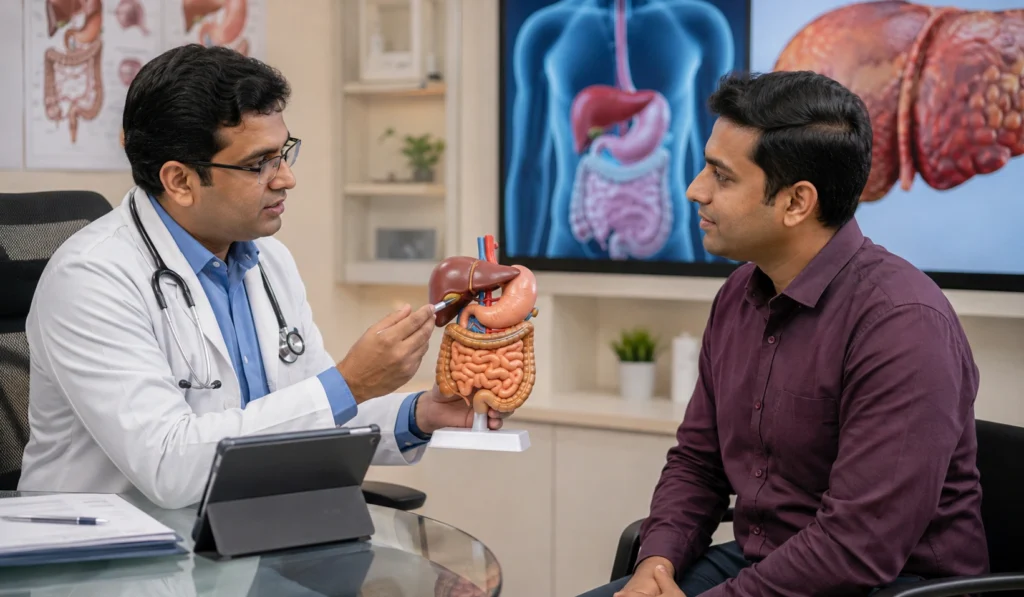
Patients often delay consultation because acidity, gas, bloating, constipation, and fatty liver are treated as common lifestyle issues. Occasional symptoms may improve with better food habits, walking, water intake, and avoiding trigger foods. But when symptoms keep returning, or reports are abnormal, proper medical evaluation becomes important.
You should consider visiting a gastroenterology clinic if you have repeated acidity, bloating, constipation, loose motion, stomach pain, blood in stool, black stool, unexplained weight loss, loss of appetite, vomiting, jaundice, dark urine, fatty liver on ultrasound, abnormal LFT, FibroScan showing stiffness, or stomach pain with fever and weakness.
Gut health and liver health are closely connected, so repeated symptoms should not be managed only with home remedies, antacids, liver tonics, or laxatives. Early diagnosis can help identify whether the problem is related to the stomach, intestine, liver, gallbladder, pancreas, or bowel, and guide the right treatment.
For proper gastro-liver evaluation, call +919942728701 to book an appointment with Dr. Jitendra Mohan Jha Liver & Gastro Clinic. Dr. Jitendra Mohan Jha is one of the best liver doctors in Patna and a trusted choice for patients looking for stomach, intestine, and liver-related care.
FAQs
1. How are gut health and liver health connected?
The gut digests food and absorbs nutrients, while the liver processes nutrients, produces bile, and supports metabolism. Poor diet, obesity, diabetes, alcohol, and certain medicines can affect both digestion and liver health.
2. What digestive symptoms should not be ignored?
Repeated acidity, bloating, constipation, diarrhea, abdominal pain, vomiting, blood in stool, black stool, appetite loss, unexplained weight loss, or sudden bowel habit changes should be checked by a doctor.
3. Can fatty liver cause digestive symptoms?
Fatty liver may not cause clear symptoms in many patients. Some people may feel tiredness, heaviness, bloating, acidity, or discomfort, but these symptoms can also come from other digestive conditions.
4. When should I visit a gastroenterologist?
You should visit a gastroenterologist if digestive symptoms keep returning, do not improve with basic changes, or appear with blood in stool, black stool, jaundice, weight loss, vomiting, severe pain, or abnormal liver reports.
5. Can lifestyle changes improve gut and liver health?
Yes, healthy meals, regular walking, weight control, reduced sugar and fried foods, enough water, better bowel habits, diabetes control, and alcohol avoidance can support gut and liver health.
6. Which tests are used for gut and liver problems?
Depending on symptoms, tests may include LFT, CBC, blood sugar, thyroid test, stool test, ultrasound, FibroScan, viral hepatitis tests, endoscopy, or colonoscopy. Not every patient needs every test.