
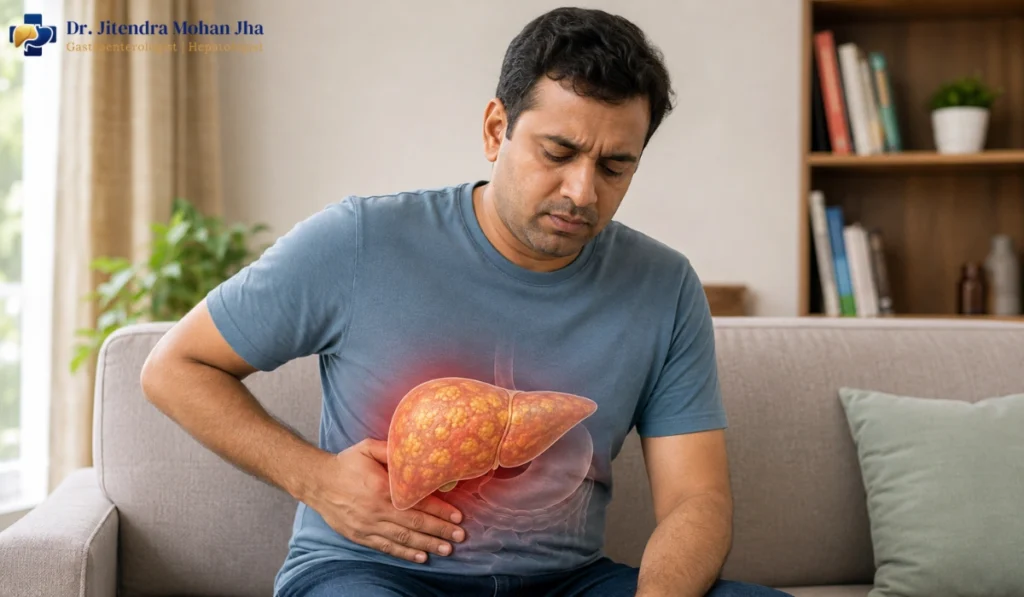
Fatty liver is one of the most common liver-related findings in ultrasound reports. Many patients come to know about it during a routine health checkup, after a liver function test shows high SGPT or SGOT, or when an ultrasound report mentions “grade 1 fatty liver” or “fatty infiltration of the liver.”
The confusing part is that fatty liver symptoms are often mild, vague, or completely absent in the early stage. A patient may feel normal but still have fat buildup in the liver. Another patient may feel tiredness, bloating, heaviness in the upper abdomen, or poor digestion and wonder whether it is acidity, gas, or a liver problem.
At Dr. Jitendra Mohan Jha Liver & Gastro Clinic, we often see patients who ignore fatty liver because there is no pain. But fatty liver should not be taken lightly, just because symptoms are not obvious. If it is linked with diabetes, obesity, high triglycerides, alcohol use, or repeated abnormal liver reports, it needs proper evaluation and follow-up.
What Is Fatty Liver?
Fatty liver means extra fat has collected inside the liver cells. A small amount of fat in the liver may not always cause immediate trouble, but excess fat can put stress on the liver. In some patients, this may remain mild. In others, it may lead to liver inflammation, fibrosis, or long-term liver damage if not managed in time.
Fatty liver can happen in people who drink alcohol, but it can also happen in people who do not drink alcohol at all. Many non-alcoholic fatty liver cases are linked with metabolic health issues such as weight gain, belly fat, diabetes, insulin resistance, high triglycerides, high cholesterol, and low physical activity.
This is why fatty liver treatment is not only about taking a liver tonic. The doctor needs to understand why fat is building up in the liver and whether there is any sign of liver inflammation or stiffness.
Read This: When Should You See a Gastroenterologist? Signs You Should Not Ignore
Why Fatty Liver Is Often Silent
Fatty liver is often called a silent condition because many patients do not feel any clear symptoms in the beginning. The liver does not always give early warning signs like pain or fever. A person may continue daily life normally while the liver report is already abnormal.
In many cases, fatty liver is detected because of:
- Ultrasound abdomen
- High SGPT or SGOT in LFT
- Routine health checkup
- Diabetes or cholesterol evaluation
- Obesity or belly fat assessment
- Abdominal heaviness or bloating
- FibroScan was advised for liver stiffness
This silent nature is the reason patients should not wait for jaundice, severe pain, swelling, or vomiting blood before taking liver health seriously. Early evaluation is easier and safer than waiting for complications.
Common Fatty Liver Symptoms Patients May Notice
Fatty liver symptoms are not always specific. They can overlap with acidity, gas, indigestion, thyroid problems, diabetes, sleep issues, stress, or poor food habits. That is why symptoms alone cannot confirm fatty liver. But when symptoms appear with fatty liver on ultrasound or abnormal liver function tests, they should be checked properly.
Some patients may notice:
- Tiredness or low energy
- A feeling of pressure or discomfort in the upper right area of the belly
- Bloating or fullness after meals
- Poor appetite
- Nausea
- General weakness
- Difficulty losing weight
- Fatty liver on ultrasound
- High SGPT or SGOT
- Belly fat with abnormal liver reports
These symptoms do not prove fatty liver by themselves. For example, bloating may be due to acidity, constipation, IBS, gallbladder problems, or food intolerance. Tiredness may be due to anemia, thyroid disease, diabetes, sleep problems, or vitamin deficiency. But if these symptoms keep returning and your liver report is abnormal, you should not ignore them.
Also Read: What are the Super Foods for the Liver?
Can Fatty Liver Happen Without Symptoms?
Yes. Fatty liver can happen without any obvious symptoms. This is very common. A patient may have normal appetite, no stomach pain, no jaundice, and no major discomfort, yet the ultrasound may show fatty liver.
This is why reports matter. If your ultrasound shows fatty liver or your LFT shows high SGPT, SGOT, GGT, or bilirubin, do not assume everything is fine just because you feel normal. The next step should be to understand the grade of fatty liver, metabolic risk factors, alcohol history, medicine use, and whether further testing like FibroScan is needed.
Fatty liver is easier to manage when it is detected early. Ignoring it for years, especially with diabetes, weight gain, alcohol intake, or high cholesterol, may increase the risk of liver inflammation and fibrosis.
Warning Signs That Fatty Liver May Be Progressing
Most patients with fatty liver do not develop serious symptoms in the beginning. But in some people, fat buildup can lead to liver inflammation, scarring, stiffness, and later complications. This risk is higher when fatty liver is associated with diabetes, obesity, alcohol use, high triglycerides, high cholesterol, or repeated abnormal LFT reports.
You should seek medical attention if you notice:
- Yellow eyes or jaundice
- Dark urine
- Swelling in the legs or abdomen
- Vomiting blood
- Black stool
- Severe tiredness
- Loss of appetite for many days
- Unexplained weight loss
- Confusion or excessive sleepiness
- Repeated high SGPT or SGOT
- FibroScan shows liver stiffness
These warning signs should not be managed with detox drinks, herbal powders, or liver tonics. They may indicate a more serious liver or digestive tract problem and need proper evaluation.
You May Like: When Does Acid Reflux Become GERD?
Fatty Liver Causes: Why Does It Happen?
Fatty liver usually develops because of a combination of lifestyle, metabolic, and sometimes alcohol-related factors. It is not caused by one meal or one food item. The liver slowly starts storing excess fat when the body is unable to handle fat and sugar metabolism properly.
Common fatty liver causes include excess body weight, belly fat, diabetes, insulin resistance, high triglycerides, high cholesterol, high blood pressure, low physical activity, sugary drinks, fried foods, processed foods, and high-calorie diets. Alcohol can also cause or worsen fatty liver, even when other risk factors are present.
Some medicines, rapid weight gain, rapid weight loss, family tendency, and certain medical conditions may also contribute. That is why two patients with fatty liver may need different advice. One may need diabetes control, another may need weight loss, another may need alcohol avoidance, and another may need evaluation for medicines or other liver diseases.
High SGPT, SGOT, or Fatty Liver on Ultrasound: What Should Patients Do?
Many patients become worried when their report shows high SGPT, high SGOT, raised GGT, or fatty liver on ultrasound. These findings are important, but they should be interpreted correctly. High liver enzymes can happen in fatty liver, but they can also be linked with viral hepatitis, alcohol-related liver disease, medicine-related liver injury, bile duct problems, autoimmune liver disease, or other liver conditions.
If your ultrasound shows fatty liver, the next step is not to panic or start random medicines. The doctor may review your LFT pattern, ultrasound grade, weight, waist size, sugar level, lipid profile, alcohol intake, medicines, supplements, thyroid status, and family history. In selected patients, viral hepatitis tests or other liver-related tests may be advised.
FibroScan may be needed when the doctor wants to assess liver stiffness or fibrosis risk. This is especially useful in patients with long-standing fatty liver, diabetes, obesity, abnormal LFTs, or a higher risk of liver scarring.
Also Read: Pain in the Left Side of the Lower Abdomen: Gas, Constipation, or Something Else?
How Fatty Liver Is Diagnosed and Monitored
Fatty liver cannot be confirmed by symptoms alone. Reports, risk factors, and liver tests are also important. Many patients do not have symptoms, so reports and risk factors become important. A proper evaluation helps understand whether fatty liver is mild, whether liver enzymes are raised, and whether there is a risk of liver inflammation or fibrosis.
Depending on the patient’s condition, evaluation may include liver function tests, complete blood count, fasting sugar, HbA1c, lipid profile, thyroid test, viral hepatitis tests, abdominal ultrasound, and FibroScan. Other tests may be advised if reports suggest another liver condition.
Not every patient needs every test. The decision depends on age, symptoms, alcohol history, diabetes, cholesterol, body weight, LFT results, ultrasound findings, and examination. The goal is to avoid both extremes: ignoring fatty liver completely or doing unnecessary testing without a reason.
Monitoring is also important. If lifestyle changes are advised, follow-up LFT, weight tracking, sugar control, lipid control, and repeat imaging or FibroScan may be suggested depending on the case. Fatty liver treatment works best when the patient follows a plan consistently instead of stopping after one normal report.
Read More: What Are the Treatments for Constipation?
Fatty Liver Treatment: What Actually Helps?
Fatty liver treatment depends on the cause, liver reports, ultrasound findings, FibroScan results, diabetes or cholesterol status, body weight, alcohol intake, and overall health condition. There is no single medicine, detox drink, or liver tonic that works for every patient.
For many patients, the foundation of treatment is lifestyle correction. This does not mean extreme dieting or sudden heavy exercise. It means making practical changes that can be followed consistently.
Helpful steps may include:
- Gradual weight loss if overweight
- Regular walking or exercise
- Reducing sugar, sweets, and sugary drinks
- Cutting down on refined carbohydrates and fried foods
- Eating more vegetables, dal, whole grains, and balanced protein
- Controlling diabetes, cholesterol, and triglycerides
- Avoiding alcohol if advised
- Avoiding unnecessary painkillers, supplements, and herbal medicines
- Following repeat LFT, ultrasound, or FibroScan advice
Some patients may also need medicines for diabetes, cholesterol, triglycerides, acidity, or other associated conditions. The treatment plan should be based on the patient’s reports and risk factors, not just on the ultrasound grade.
Read This: Is There Any Treatment for Jaundice in Adults?
When Fatty Liver Symptoms Need Medical Evaluation
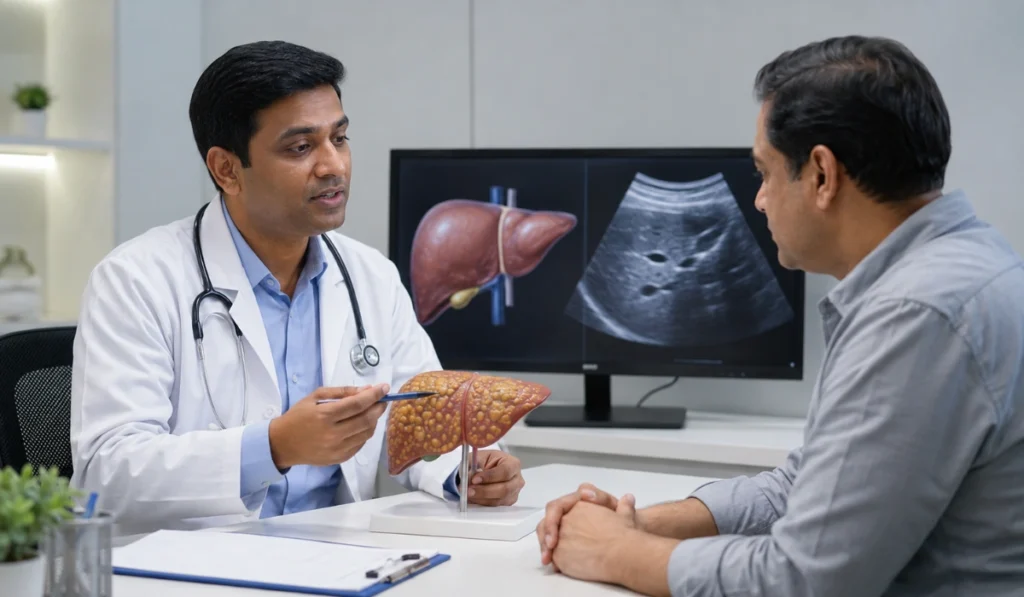
Fatty liver symptoms are often silent or vague. Some patients feel tiredness, bloating, abdominal heaviness, poor appetite, nausea, or unexplained weakness, while many have no symptoms at all. That is why fatty liver on ultrasound, high SGPT or SGOT, or repeatedly abnormal LFT should not be ignored.
You should visit a gastroenterology clinic in Patna if your ultrasound shows fatty liver, your liver enzymes remain high, FibroScan shows liver stiffness, or symptoms keep coming back. Medical attention is also important if you have diabetes, obesity, high triglycerides, alcohol intake, family history of liver disease, or other metabolic risk factors.
Warning signs such as jaundice, dark urine, swelling in the legs or abdomen, black stool, vomiting blood, confusion, severe weakness, unexplained weight loss, or loss of appetite for many days should not be delayed. These symptoms may suggest a more serious liver or digestive condition and need timely evaluation.
Patients searching for a leading gastroenterologist in Patna should focus on proper diagnosis, FibroScan guidance when needed, and treatment based on liver reports, metabolic risk factors, and overall health condition. Early evaluation can help identify the cause, assess liver risk, and guide the right treatment plan.
For proper fatty liver evaluation and treatment guidance in Patna, call +919942728701 to book an appointment with Dr. Jitendra Mohan Jha Gastro & Liver Clinic. Dr. Jitendra Mohan Jha is one of the best fatty liver doctors in Patna for patients with fatty liver symptoms, high SGPT, abnormal LFT, FibroScan concerns, and liver-related health issues.
FAQs
1. What early signs may appear when fatty liver starts developing?
Fatty liver may not cause symptoms in many patients. Some people may notice tiredness, weakness, bloating, upper abdominal heaviness, poor appetite, nausea, or abnormal liver function test reports.
2. Can fatty liver happen without symptoms?
Yes. Fatty liver can be completely silent in the early stage. Many patients come to know about it only after an ultrasound, LFT, or routine health checkup.
3. Does high SGPT mean fatty liver?
High SGPT can happen due to fatty liver, but it can also occur because of viral hepatitis, alcohol-related liver disease, medicines, bile duct problems, or other liver conditions. Proper evaluation is needed.
4. Is fatty liver dangerous?
Fatty liver may remain mild in some patients, but it can progress to liver inflammation, fibrosis, cirrhosis, or complications in others, especially when linked with diabetes, obesity, alcohol use, or repeated abnormal liver reports.
5. What is the treatment for fatty liver?
Fatty liver treatment may include weight control, regular walking, diet correction, diabetes and cholesterol control, alcohol avoidance, and follow-up tests. Treatment depends on the cause, severity, and the patient’s overall health condition.
6. When should I see a doctor for fatty liver?
You should see a doctor if an ultrasound shows fatty liver, SGPT or SGOT is high, symptoms keep returning, FibroScan shows stiffness, or you have jaundice, swelling, black stool, vomiting blood, severe tiredness, or unexplained weight loss.