

A liver function test, also called LFT, is one of the most common blood tests advised when a patient has acidity, abdominal discomfort, jaundice, fatty liver, weakness, vomiting, dark urine, alcohol history, medicine use, or abnormal ultrasound findings. Many patients receive their report and immediately search for “liver function test normal level”, “SGPT normal range”, “SGOT normal range”, “bilirubin high meaning”, or “GGT high causes”.
The important point is this: LFT values should not be understood by looking at one number alone. SGPT, SGOT, bilirubin, ALP, GGT, albumin, and other values together help doctors understand whether the liver is under stress, whether bile flow may be affected, or whether further evaluation is needed. A mildly raised value may not always mean serious disease, but repeated or very high values should not be ignored.
What Is a Liver Function Test?
A liver function test is a group of blood tests used to check liver-related enzymes, bilirubin, proteins, and other markers. These tests help assess liver injury, bile flow problems, jaundice, fatty liver, hepatitis, alcohol-related liver disease, medicine-related liver injury, and other liver concerns.
Common LFT markers include:
- SGPT or ALT
- SGOT or AST
- Bilirubin
- ALP
- GGT
- Albumin
- Total protein
- Sometimes PT/INR, depending on the case
Although people commonly call it a “liver function test”, not every value directly measures liver function. Some values show liver cell injury, some suggest bile duct or gallbladder-related issues, and some help assess the liver’s ability to make proteins. This is why interpretation should be done with symptoms, history, and other reports.
Read This: What Are the Symptoms of Fatty Liver? Silent Signs You Should Not Ignore
Liver Function Test Normal Range: What Patients Should Know
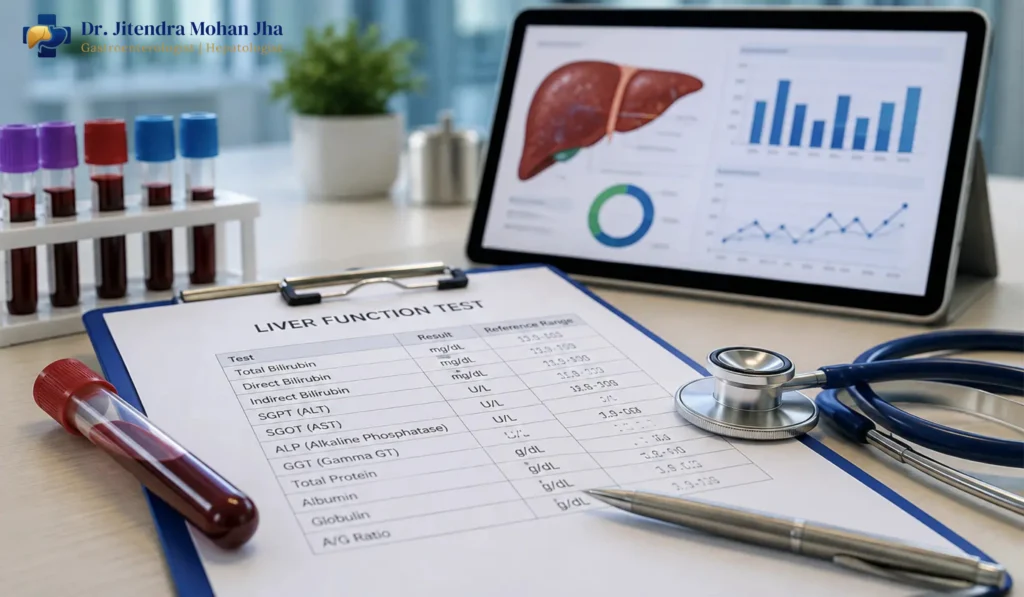
Normal ranges can vary slightly from one laboratory to another. Your report’s reference range should always be checked because different labs may use different machines, methods, and units.
A commonly used reference idea is:
- SGPT or ALT: around 4 to 36 U/L
- SGOT or AST: around 8 to 33 U/L
- Total bilirubin: around 0.1 to 1.2 mg/dL
- ALP: around 20 to 130 U/L
- GGT: varies by lab, age, sex, and testing method
- Albumin: usually checked to assess protein-making function
These numbers are only a general guide. A value slightly above range may need repeat testing or clinical review, while a value many times higher than normal may need quicker evaluation. The pattern matters more than a single number.
What Does High SGPT Mean?
SGPT, also called ALT, is an enzyme found mainly in the liver. When liver cells are irritated, inflamed, or damaged, SGPT may rise. Many patients with fatty liver, viral hepatitis, alcohol-related liver disease, medicine-related liver injury, or metabolic liver disease may show high SGPT.
High SGPT can be seen in:
- Fatty liver
- Viral hepatitis
- Alcohol-related liver disease
- Medicine or supplement-related liver injury
- Obesity and insulin resistance
- Diabetes and high triglycerides
- Bile duct or gallbladder-related problems in some cases
- Autoimmune or other liver conditions
A common mistake is assuming that high SGPT always means fatty liver. Fatty liver is common, but it is not the only reason. The doctor may review ultrasound, alcohol intake, medicines, viral hepatitis risk, weight, sugar level, lipid profile, and other liver values before deciding the cause.
What Does High SGOT Mean?
SGOT, also called AST, is another enzyme measured in LFT. It is found in the liver, but also in muscles and other tissues. This means SGOT can rise due to liver-related reasons as well as non-liver causes.
High SGOT may be seen in liver inflammation, alcohol-related liver injury, fatty liver, viral hepatitis, medicine-related injury, muscle injury, heavy exercise, or other medical conditions. When both SGPT and SGOT are high, their pattern can help the doctor understand the likely cause.
For example, if SGPT is higher, fatty liver or liver cell irritation may be considered. If SGOT is much higher in certain patterns, alcohol-related liver injury, muscle injury, or other conditions may need evaluation. This should not be self-interpreted from the report alone.
Also Read: What are the Super Foods for the Liver?
Bilirubin: What Does High Bilirubin Mean?
Bilirubin is a yellow pigment made when the body breaks down old red blood cells. The liver processes bilirubin and helps remove it from the body. When bilirubin rises, patients may develop yellow eyes, yellow skin, dark urine, pale stool, itching, poor appetite, nausea, or weakness.
High bilirubin may happen due to:
- Jaundice
- Viral hepatitis
- Liver inflammation
- Bile duct blockage
- Gallstone-related obstruction
- Alcohol-related liver disease
- Certain blood-related conditions
- Advanced liver disease
- Some inherited conditions
Bilirubin should be taken seriously when it is associated with yellow eyes, dark urine, fever, abdominal pain, vomiting, pale stool, or itching. In such cases, the cause should be identified rather than taking random liver tonics.
GGT: Why This Value Is Important
GGT is an enzyme that may rise in liver, bile duct, and alcohol-related conditions. It is often checked along with ALP, SGPT, SGOT, and bilirubin. If ALP is high, GGT can help doctors understand whether the source may be liver or bile duct related.
High GGT may be seen in:
- Alcohol use
- Fatty liver
- Bile duct problems
- Gallbladder or stone-related obstruction
- Certain medicines
- Hepatitis or liver inflammation
- Metabolic liver disease
GGT can also be sensitive to alcohol and some medicines, so a high value does not confirm one diagnosis by itself. It should be read with the full LFT pattern and the patient’s history.
When Should You Worry About Abnormal LFT?
Not every abnormal LFT means emergency, but some patterns need early attention. A mildly raised SGPT or SGOT may need lifestyle review, repeat testing, ultrasound, or additional tests. But very high values, rising bilirubin, or symptoms of jaundice need proper medical evaluation.
You should not delay medical advice if you have:
- Yellow eyes or dark urine
- Pale stool or itching
- Severe weakness or loss of appetite
- Vomiting or fever with abnormal LFT
- Upper abdominal pain
- Swelling in the abdomen or legs
- Black stool or vomiting blood
- Repeated high SGPT or SGOT
- Fatty liver with diabetes or obesity
- Abnormal LFT after taking medicines or supplements
Patients with diabetes, obesity, high cholesterol, alcohol intake, viral hepatitis risk, or long-term medicine use should take abnormal liver reports more seriously.
You May Like: When Does Acid Reflux Become GERD?
What Can Cause Abnormal Liver Function Tests?
Abnormal LFT can happen due to many reasons. Some are mild and temporary, while others need treatment and follow-up. The cause cannot be decided only from one value.
Common causes include fatty liver, viral hepatitis, alcohol-related liver disease, gallbladder stones, bile duct obstruction, medicine-related liver injury, herbal or gym supplements, infection, autoimmune liver disease, metabolic liver disease, and advanced liver conditions.
This is why a report should be reviewed with symptoms, medical history, ultrasound, medicines, alcohol intake, diabetes, cholesterol, and sometimes FibroScan or viral marker tests.
How Doctors Evaluate Abnormal LFT
Evaluation depends on the LFT pattern. If SGPT and SGOT are high, the doctor may look for liver cell injury, fatty liver, hepatitis, medicine effect, alcohol-related injury, or metabolic causes. If bilirubin, ALP, and GGT are high, bile duct, gallbladder, jaundice, or obstruction-related causes may need to be checked.
Depending on the case, tests may include:
- Repeat LFT
- CBC
- Viral hepatitis markers
- Blood sugar or HbA1c
- Lipid profile
- Ultrasound abdomen
- FibroScan for fatty liver or liver stiffness
- PT/INR or albumin when liver function needs assessment
- Additional tests if autoimmune or other liver disease is suspected
Not every patient needs every test. The right test depends on symptoms, report pattern, age, alcohol history, medicine use, and risk factors.
Can LFT Improve Naturally?
Some liver function test abnormalities can improve when the underlying cause is managed. For example, fatty liver-related SGPT or SGOT may improve with weight control, regular walking, better diet, diabetes control, triglyceride control, and alcohol avoidance when advised.
Useful steps may include:
- Reduce sugar, sweets, and sugary drinks
- Avoid alcohol if advised
- Walk or exercise regularly
- Reduce fried and processed foods
- Control diabetes, cholesterol, and triglycerides
- Avoid unnecessary painkillers and supplements
- Do not take liver tonics without medical advice
- Follow repeat testing as advised
However, natural steps are not enough in every case. Viral hepatitis, jaundice, bile duct blockage, gallstone-related obstruction, medicine-related injury, and advanced liver disease need proper diagnosis and treatment.
Also Read: Pain in the Left Side of the Lower Abdomen: Gas, Constipation, or Something Else?
When to Visit a Gastroenterology Clinic in Patna
You should visit a gastroenterology clinic in Patna if your liver function test remains abnormal, SGPT or SGOT is repeatedly high, bilirubin is raised, GGT is high with other abnormal values, or ultrasound shows fatty liver, liver swelling, gallstones, or bile duct concerns.
Patients searching for a leading gastroenterologist in Patna should focus on proper report interpretation, diagnosis of the actual cause, and treatment based on symptoms, LFT pattern, ultrasound, FibroScan, and risk factors.
For LFT report review, fatty liver evaluation, jaundice symptoms, high SGPT, high SGOT, raised bilirubin, or abnormal GGT, call +919942728701 to book an appointment with Dr. Jitendra Mohan Jha Liver & Gastro Clinic. Patients looking for liver function test in Patna can consult for proper evaluation and treatment advice.
Read More: Liver & Digestive Care Services in Patna
FAQs
1. What is the normal level of liver function test?
1. What is the normal level of liver function test?
Normal levels vary by laboratory. Common reference ranges include SGPT around 4 to 36 U/L, SGOT around 8 to 33 U/L, total bilirubin around 0.1 to 1.2 mg/dL, and ALP around 20 to 130 U/L. Always compare with your lab report’s reference range.
2. Is high SGPT dangerous?
High SGPT may happen due to fatty liver, hepatitis, alcohol, medicines, or other liver conditions. Mild elevation may not always be dangerous, but repeated or very high SGPT should be evaluated.
3. What does high SGOT mean?
High SGOT may be linked with liver injury, alcohol-related liver disease, fatty liver, viral hepatitis, medicine effect, muscle injury, or other causes. It should be read along with SGPT and other LFT values.
4. What does high bilirubin indicate?
High bilirubin may indicate jaundice, liver inflammation, bile duct blockage, gallstone-related obstruction, blood-related causes, or liver disease. Yellow eyes, dark urine, pale stool, or itching with high bilirubin needs medical evaluation.
5. Why is GGT high?
GGT may rise due to alcohol use, fatty liver, bile duct problems, gallbladder disease, medicines, hepatitis, or other liver conditions. It should not be interpreted alone.
6. Can fatty liver cause abnormal LFT?
Yes, fatty liver can cause raised SGPT, SGOT, or GGT in some patients. But abnormal LFT can also happen due to many other causes, so proper evaluation is important.
7. Can LFT become normal again?
In many cases, LFT can improve when the cause is treated or controlled. Fatty liver-related changes may improve with weight control, diet correction, regular activity, diabetes control, and alcohol avoidance when advised.