
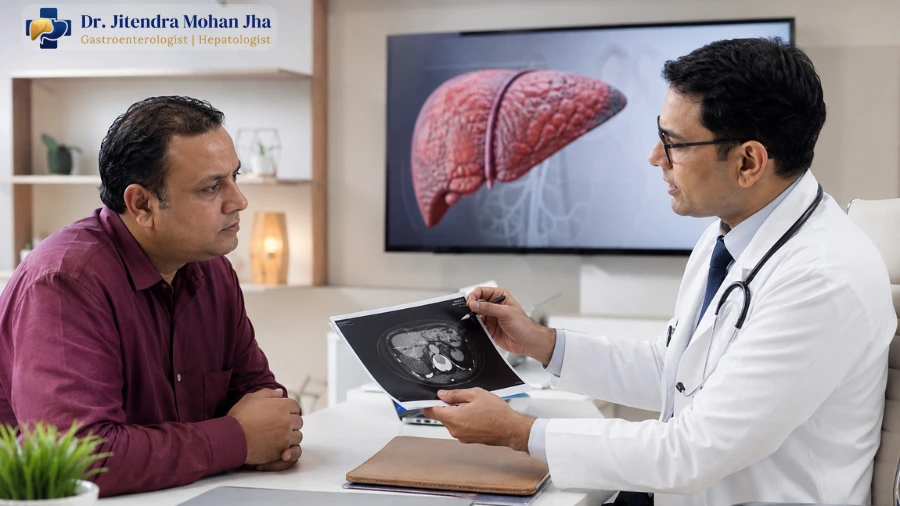
Liver cirrhosis is an advanced stage of long-term liver damage where healthy liver tissue is gradually replaced by scar tissue. Because of this scarring, the liver may gradually lose its ability to perform its normal functions. Many patients hear the word “cirrhosis” after an ultrasound, FibroScan, liver function test, or after symptoms like swelling in the abdomen, yellow eyes, vomiting blood, black stool, or severe weakness.
At Dr. Jitendra Mohan Jha Liver & Gastro Clinic, we focus on helping patients understand what cirrhosis means, how serious it is, what treatment options are available, what diet changes are needed, and when urgent medical attention is required. Cirrhosis should not be ignored, but it should also not create panic. The right step is proper evaluation, cause-based treatment, regular monitoring, and prevention of complications.
Cirrhosis may not always be fully reversible, but treatment can slow further liver damage, control symptoms, manage complications, and improve quality of life. In advanced liver failure, liver transplant may be considered for selected patients. Treatment depends on the cause, stage, complications, and overall health condition.
Also Read: What Are the Symptoms of Fatty Liver? Silent Signs You Should Not Ignore
What Is Liver Cirrhosis?
Liver cirrhosis means the liver has developed permanent scarring due to repeated or long-term injury. The liver normally performs many important functions. It processes nutrients, produces bile, helps with digestion, makes proteins needed for blood clotting, stores energy, and removes harmful substances from the body.
When liver damage continues for a long time, scar tissue starts replacing healthy liver tissue. As scarring increases, blood flow through the liver becomes difficult and liver function may gradually decline. This can lead to complications such as fluid in the abdomen, swelling in the legs, jaundice, confusion, low platelets, bleeding from enlarged veins, and liver failure.
Many people with cirrhosis may not feel serious symptoms in the early stage. This is why patients with fatty liver, hepatitis B or C, alcohol-related liver disease, repeated abnormal LFT, or FibroScan showing stiffness should not delay evaluation.
What Causes Liver Cirrhosis?
Cirrhosis does not happen suddenly in most patients. It usually develops after years of liver injury. The cause should be identified because treatment depends strongly on why the liver became damaged.
Common causes of liver cirrhosis include:
- Long-term alcohol-related liver disease
- Fatty liver disease, especially with diabetes, obesity, or high triglycerides
- Chronic hepatitis B or hepatitis C infection
- Autoimmune liver disease
- Bile duct diseases
- Certain inherited liver diseases
- Long-term liver inflammation
- Some medicine-related or toxin-related liver injury
Some patients may have more than one cause. For example, a person may have fatty liver along with alcohol use, diabetes, or viral hepatitis. That is why a proper liver
evaluation is important instead of assuming the cause from one report.
Also Read: Liver Function Test Normal Range: What SGPT, SGOT, Bilirubin, and GGT Mean
Symptoms of Liver Cirrhosis
Cirrhosis symptoms may be mild in the beginning and become more obvious as liver damage increases. Some patients are diagnosed before symptoms appear, while others come with complications.
Common symptoms may include tiredness, weakness, poor appetite, nausea, weight loss, itching, abdominal heaviness, swelling in the legs, or fluid in the abdomen. Some patients may notice yellow eyes, dark urine, easy bruising, frequent bleeding from gums or nose, or changes in sleep pattern.
Warning symptoms should be taken seriously:
- Yellow eyes or jaundice
- Swelling in the abdomen or legs
- Vomiting blood
- Black stool
- Confusion, excessive sleepiness, or behavior changes
- Severe weakness or dizziness
- Loss of appetite for many days
- Unexplained weight loss
- Fever with abdominal swelling
- Reduced urine output
- Severe abdominal pain
Vomiting blood, black stool, confusion, severe drowsiness, or sudden abdominal swelling can suggest advanced complications and may need urgent medical care.
Is Liver Cirrhosis Curable?
Because of this scarring, the liver may gradually lose its ability to perform its normal functions. In most cases, the scar tissue already formed in cirrhosis cannot be completely reversed. However, treatment can still be very useful. The goal is to stop further damage, treat the underlying cause, control symptoms, prevent complications, and preserve remaining liver function as much as possible.
For example, alcohol-related liver disease needs complete alcohol avoidance. Hepatitis B or C needs proper antiviral evaluation. Fatty liver-related cirrhosis needs weight control, diabetes management, cholesterol control, diet correction, and regular monitoring. Autoimmune or bile duct-related liver disease may need specific medicines.
So, cirrhosis may not be “curable” in the simple sense, but many patients can live better and longer when the cause is treated early and complications are managed properly. In selected advanced cases, liver transplant may be considered.
Also Read: How do I improve my liver naturally?
What Is the Best Treatment for Liver Cirrhosis?
There is no single best treatment for every cirrhosis patient. The best treatment is cause-based and stage-based. A patient with early compensated cirrhosis needs a different plan from a patient with fluid in the abdomen, vomiting blood, infection, or confusion.
Treatment may include:
- Treating the cause of liver damage
- Complete alcohol avoidance when alcohol is involved
- Antiviral treatment evaluation for hepatitis B or C
- Diabetes, obesity, and cholesterol control in fatty liver-related cirrhosis
- Medicines to reduce fluid buildup when needed
- Salt restriction for ascites or swelling
- Endoscopy screening for enlarged veins in the food pipe
- EVL or banding if varices are present and bleeding risk is high
- Medicines to reduce bleeding risk in selected patients
- Treatment for confusion due to hepatic encephalopathy
- Vaccination and infection prevention when advised
- Regular screening for liver cancer
- Liver transplant evaluation in advanced liver failure
Patients should not take painkillers, herbal medicines, liver tonics, supplements, or antibiotics without medical advice. Some medicines that seem harmless can worsen liver function or increase bleeding risk in cirrhosis.
How Long Can You Live With Liver Cirrhosis?
Life expectancy in liver cirrhosis depends on the stage of disease, cause, age, complications, alcohol use, kidney function, infections, bleeding history, and how well treatment and follow-up are maintained. No article can predict an exact survival time for an individual patient.
Many patients with early or compensated cirrhosis may live for years when the cause is controlled and complications are prevented. However, once cirrhosis becomes decompensated, meaning complications such as ascites, jaundice, variceal bleeding, confusion, or liver failure appear, the condition becomes more serious and needs closer care.
Doctors may use scores such as Child-Pugh or MELD to estimate severity and guide treatment decisions. These scores are based on blood tests and clinical findings. Patients should not compare their condition with someone else because two people with cirrhosis can have very different outcomes.
The most important factors that can improve outlook include stopping alcohol completely if advised, treating hepatitis, controlling diabetes and weight, avoiding harmful medicines, eating correctly, attending follow-up visits, and treating complications early.
What to Eat in Liver Cirrhosis
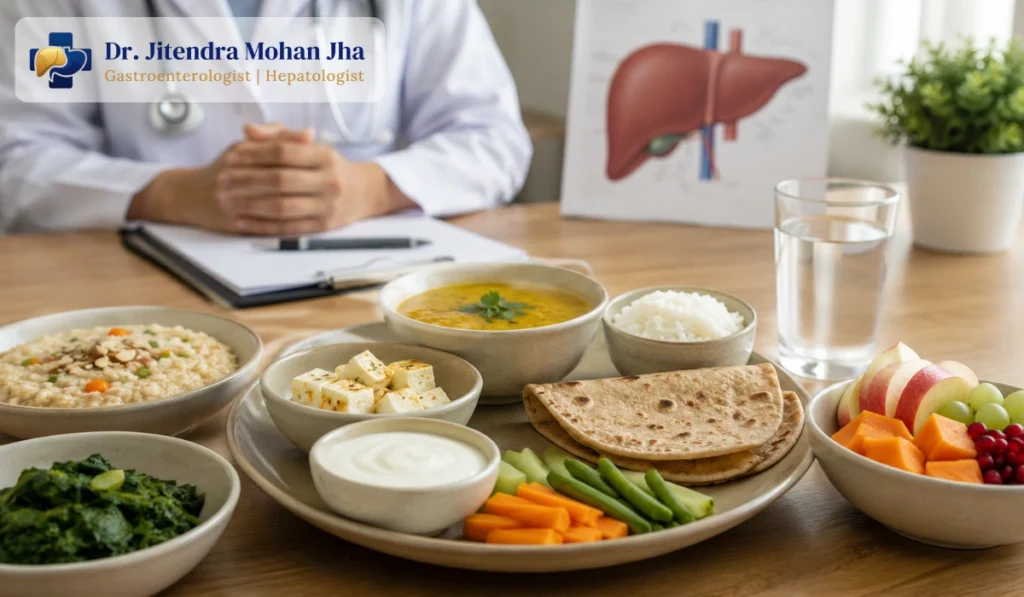
Diet plays an important role in cirrhosis care, but the diet should be customized according to the patient’s condition. A patient with fluid in the abdomen may need salt restriction. A patient with muscle loss may need enough protein. A patient with diabetes needs sugar control. A patient with confusion may need special medical guidance.
In general, patients may be advised to eat balanced meals with enough calories and protein unless the doctor gives a specific restriction. Long fasting should be avoided because cirrhosis can increase the risk of muscle loss and weakness.
Helpful food choices may include:
- Home-cooked meals with controlled salt
- Dal, pulses, paneer, curd, eggs, fish, or lean protein as advised
- Vegetables and fruits in suitable portions
- Whole grains such as roti, rice, oats, or daliya as per tolerance
- Small frequent meals if appetite is low
- A bedtime snack if advised to prevent long fasting
- Adequate water intake unless fluid restriction is advised
Protein should not be stopped without medical advice. In the past, many patients were told to avoid protein completely, but this can worsen weakness and muscle loss. Protein adjustment should be done only under medical supervision, especially if there is confusion or advanced disease.
What Not to Eat or Avoid in Liver Cirrhosis
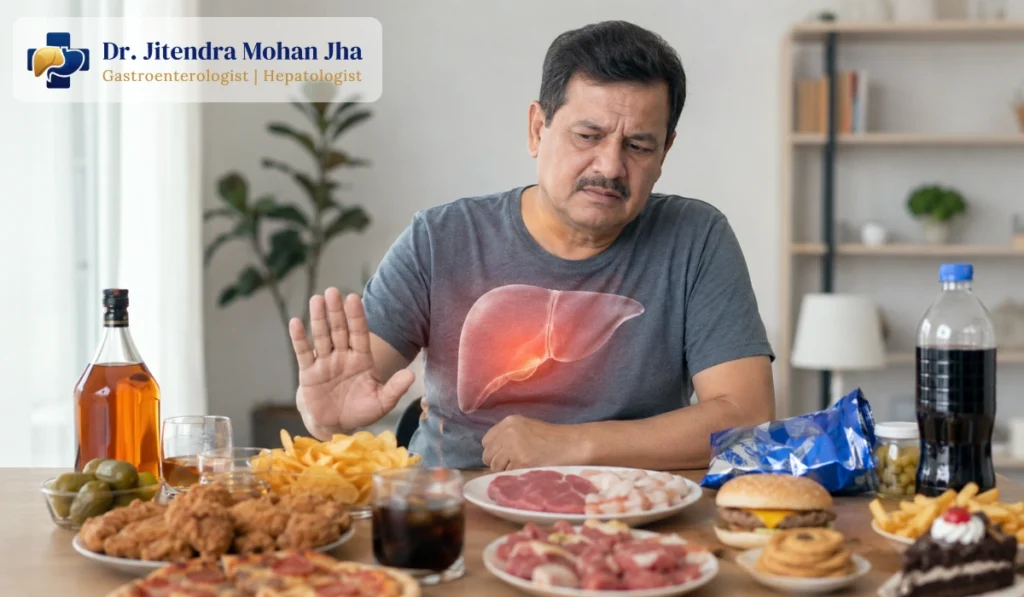
Patients with cirrhosis should avoid anything that can increase liver stress, fluid retention, infection risk, or bleeding risk. The most important rule is complete alcohol avoidance. Even small amounts of alcohol can be harmful in cirrhosis.
Things to avoid or limit include:
- Alcohol in any form
- High-salt foods, especially if there is swelling or ascites
- Pickles, papad, chips, namkeen, packaged snacks, and processed foods
- Sugary drinks and excess sweets, especially with fatty liver or diabetes
- Fried and oily foods
- Raw or unsafe seafood
- Unnecessary painkillers
- Herbal liver tonics or supplements without doctor advice
- Self-medication with antibiotics or blood thinners
Salt control is especially important for patients with abdominal fluid or leg swelling. However, diet should not become so restrictive that the patient stops eating enough food. The aim is safe, practical, and sustainable nutrition.
Also Read: What are the Super Foods for the Liver?
Tests and Monitoring Needed in Cirrhosis
Cirrhosis needs regular monitoring because complications can develop even when symptoms are controlled. The doctor may advise blood tests, ultrasound, FibroScan, endoscopy, or other tests depending on the patient’s stage and symptoms.
Common evaluation may include liver function test, CBC, kidney function test, blood clotting test, viral hepatitis tests, ultrasound abdomen, FibroScan, AFP for liver cancer screening, and upper GI endoscopy to check for varices.
Endoscopy is important in many patients because cirrhosis can cause enlarged veins in the food pipe or stomach. These veins can bleed and cause vomiting blood or black stool. Early detection helps decide whether medicines or EVL banding is needed.
When Cirrhosis Needs Urgent Medical Attention
Patients with cirrhosis should not delay care when warning symptoms appear. Some complications can become serious quickly and need urgent treatment.
Seek urgent care if there is:
- Vomiting blood
- Black stool
- Severe abdominal swelling
- Fever with abdominal pain or ascites
- Confusion or excessive sleepiness
- Severe jaundice
- Breathlessness
- Reduced urine output
- Severe weakness or fainting
- Sudden worsening of swelling
- Repeated vomiting or inability to eat
These symptoms may indicate bleeding, infection, worsening liver function, kidney involvement, or brain-related effects of liver disease.
When to Visit a Gastroenterology Clinic in Patna
You should visit a gastroenterology clinic in Patna if you have been diagnosed with liver cirrhosis, fatty liver with high liver stiffness, chronic hepatitis B or C, alcohol-related liver disease, repeated abnormal LFT, jaundice, abdominal swelling, black stool, vomiting blood, or unexplained weakness.
Patients searching for a leading gastroenterologist in Patna should focus on proper diagnosis, cause-based treatment, cirrhosis monitoring, endoscopy guidance, diet advice, and prevention of complications.
For proper liver cirrhosis evaluation and treatment guidance in Patna, call +919942728701 to book an appointment with Dr. Jitendra Mohan Jha Gastro & Liver Clinic. Dr. Jitendra Mohan Jha is one of the best liver cirrhosis doctors in Patna for patients with liver cirrhosis, abdominal swelling, jaundice, vomiting blood, black stool, abnormal LFT, hepatitis, fatty liver-related liver damage, and other serious liver-related concerns.
FAQs
1. What is liver cirrhosis?
Liver cirrhosis is advanced scarring of the liver caused by long-term liver damage. It can affect liver function and may lead to complications such as jaundice, abdominal fluid, vomiting blood, black stool, confusion, or liver failure.
2. What is the best treatment for cirrhosis?
The best treatment depends on the cause and stage. It may include alcohol avoidance, hepatitis treatment, fatty liver management, medicines for swelling or confusion, endoscopy for varices, liver cancer screening, and liver transplant evaluation in advanced cases.
3. Is liver cirrhosis curable?
In most cases, established cirrhosis scarring cannot be completely reversed. However, treatment can slow further damage, control complications, and improve quality of life. In advanced liver failure, liver transplant may be considered.
4. How long can a person live with liver cirrhosis?
Life expectancy depends on the stage, cause, complications, kidney function, alcohol use, treatment, and follow-up. Early cirrhosis may remain stable for years, while advanced cirrhosis with complications needs closer care.
5. What should a cirrhosis patient eat?
A cirrhosis patient may need balanced meals with enough protein, controlled salt, vegetables, fruits, whole grains, and small frequent meals. Diet should be personalized based on swelling, diabetes, kidney function, and confusion risk.
6. What foods should be avoided in cirrhosis?
Alcohol should be avoided completely. High-salt foods, packaged snacks, pickles, fried foods, sugary drinks, unnecessary painkillers, and herbal liver tonics without medical advice should also be avoided.
7. When is cirrhosis an emergency?
Cirrhosis may need urgent care if there is vomiting blood, black stool, confusion, severe sleepiness, fever with abdominal swelling, severe jaundice, reduced urine, fainting, or sudden worsening of swelling.