
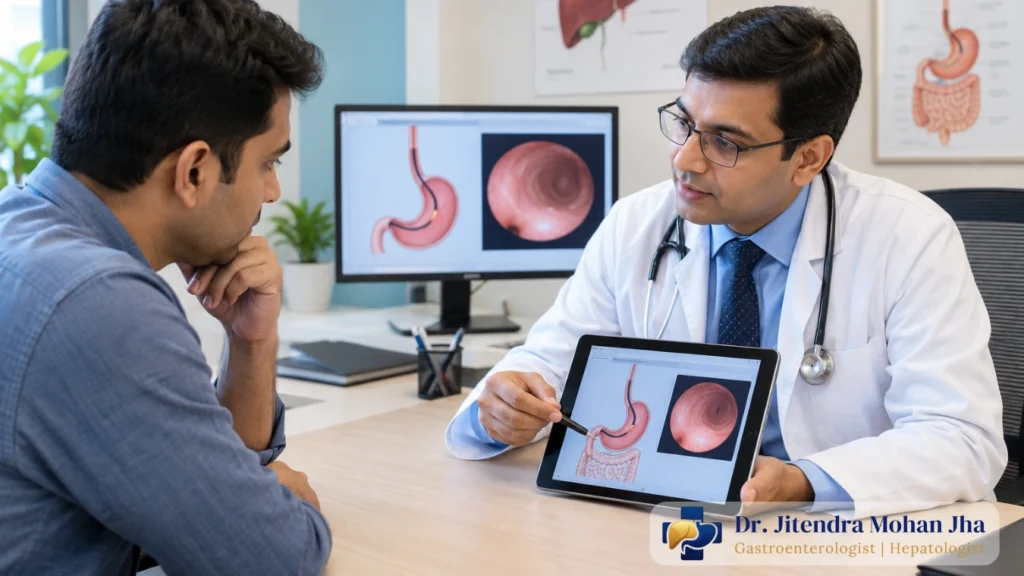
An endoscopy may be advised when symptoms such as persistent acidity, upper abdominal discomfort, frequent vomiting, swallowing difficulty, black stools, blood in vomit, unexplained weight loss, anemia, or ongoing digestive problems do not improve with medicines.
Many patients ask, “Is endoscopy painful?” or “How much does an endoscopy cost?” This examination helps the doctor view the food pipe, stomach, and beginning of the small intestine. The findings can help identify the cause of symptoms and guide suitable treatment.
What Is an Endoscopy Test?
An upper gastrointestinal endoscopy uses a thin, bendable tube with a small camera attached to it. The doctor gently guides the tube through the mouth to examine the esophagus, stomach, and duodenum, the first part of the small intestine.
The procedure can show inflammation, ulcers, bleeding, narrowed areas, swelling, or abnormal tissue. If required, the doctor may remove a very small tissue sample for testing. This sample is called a biopsy. It is not a surgical procedure and may help identify infection, inflammation, or suspicious changes.
When Is Endoscopy Needed?
A gastroenterologist may recommend endoscopy when symptoms are severe, recurrent, persistent, or unresponsive to routine treatment.
Common indications include:
- Frequent acidity or heartburn
- Pain or burning in the upper abdomen
- Recurrent nausea or vomiting
- Difficulty swallowing food or liquids
- A feeling that food is lodged in the throat or chest
- Black, sticky, or tarry stools
- Vomiting blood
- Unexplained loss of weight
- Poor appetite
- Anemia with digestive symptoms
- Long-term painkiller use accompanied by stomach problems
- Possible gastritis, ulcer, or bleeding in the upper digestive tract
Black stools and blood in vomit may indicate internal bleeding and require prompt medical attention.
Also Read: What Is Liver Cirrhosis? Treatment, Life Expectancy, Diet, and Cure
What Conditions Can Endoscopy Identify?
An upper GI endoscopy can help detect or evaluate several conditions, such as:
- Injury related to GERD
- Gastritis
- Peptic ulcers
- Bleeding from the upper digestive tract
- Esophageal varices
- Narrowed or obstructed sections
- Hiatal hernia
- Abnormal ulcers, swellings, or growths
- Changes associated with H. pylori infection through biopsy
- Possible causes of black stools or vomiting blood
Based on the findings, the doctor may recommend medicines, biopsy testing, further investigations, lifestyle changes, or treatment during the same procedure.
Endoscopy Test Price: What Determines the Cost?
In India, the cost of an endoscopy commonly ranges from ₹1,000 to ₹10,000. In Patna, a basic diagnostic endoscopy may cost around ₹1,000 to ₹3,500. The price can be higher at large hospitals or multi-specialty centres.
The final charges may vary depending on:
- Whether the procedure is diagnostic or therapeutic
- Use of throat spray or sedation
- Biopsy collection and laboratory testing
- Regular or emergency appointment
- Treatment of bleeding during endoscopy
- Special instruments or disposable equipment
- Pre-procedure consultation and investigations
Before booking, confirm whether the quoted endoscopy test price includes sedation, biopsy analysis, reports, follow-up consultation, and any additional treatment charges.
Is Endoscopy Painful?
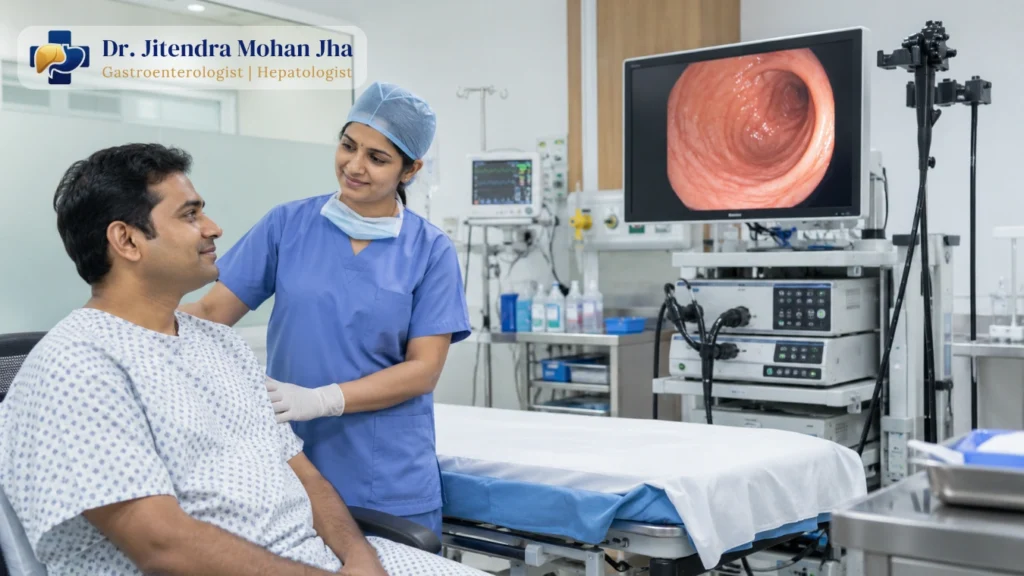
An upper GI endoscopy usually takes only a short time. Some patients experience gagging, throat pressure, mild discomfort, or temporary bloating. Sedation may be used when appropriate to make the examination easier and more comfortable.
You will generally need to remain fasting before the test. Afterward, a mild sore throat or a feeling of fullness may occur for a short period. Most patients return home on the same day unless treatment is performed or observation is advised.
Also Read: What Are the Symptoms of Fatty Liver? Silent Signs You Should Not Ignore
How Should You Prepare for Endoscopy?
Follow the fasting and medication instructions provided by your doctor or the endoscopy centre. Inform the medical team about your complete health history, including diabetes, heart disease, liver problems, pregnancy, allergies, previous surgeries, and all medicines or supplements you take.
Tell your doctor if you use:
- Blood thinners
- Insulin or other diabetes medicines
- Heart or blood pressure medicines
- Pain-relieving medicines
- Steroids
- Herbal remedies or dietary supplements
Do not stop any prescribed medicine unless your doctor specifically instructs you to do so.
When Should Endoscopy Not Be Delayed?
Seek medical evaluation without delay if you have:
- Vomiting blood
- Black, sticky, or tar-like stools
- Severe or repeated upper abdominal pain
- Difficulty swallowing
- Persistent vomiting
- Unintentional weight loss
- Severe weakness, dizziness, or fainting
- Anemia along with digestive complaints
- Liver disease with possible signs of bleeding
These symptoms may be associated with ulcers, internal bleeding, significant inflammation, narrowing, or complications related to liver disease.
Also Read: Is There Any Treatment for Jaundice in Adults?
Can Endoscopy Also Provide Treatment?
In some situations, the doctor can diagnose and treat the problem during the same examination. Possible endoscopic treatments include:
- Controlling active bleeding
- Applying clips
- Injecting medication to reduce bleeding
- Banding enlarged veins
- Removing selected swallowed objects
- Expanding narrowed areas
- Taking tissue samples for biopsy
Not every patient requires treatment during endoscopy.
What Happens After Endoscopy?
Once the examination is complete, the doctor generally discusses the findings and explains the recommended next steps. If a biopsy is collected, the laboratory result may take a few days.
Treatment depends on the diagnosis and may include acid-suppressing medicines, H. pylori treatment, ulcer care, dietary modifications, lifestyle changes, or additional tests.
If sedation was given, arrange for an adult to take you home and avoid driving until your doctor says it is safe. Seek urgent medical help if you develop severe abdominal pain, repeated vomiting, fever, breathing difficulty, or significant bleeding after the procedure.
Also Read: How do I improve my liver naturally?
When to Visit a Gastroenterology Clinic in Patna
You should visit a gastroenterology clinic in Patna if you have repeated acidity, upper abdominal pain, frequent vomiting, difficulty swallowing, black stools, blood in vomit, unexplained weight loss, anemia, or digestive symptoms that do not improve with routine medicines. These symptoms may be linked with gastritis, ulcers, reflux-related injury, upper GI bleeding, narrowing, infection, or other digestive tract conditions.
Patients searching for a leading gastroenterologist in Patna should focus on proper diagnosis, safe endoscopy guidance, clear explanation of findings, and treatment based on the real cause of symptoms instead of taking repeated acidity medicines without evaluation.
For endoscopy consultation, stomach pain evaluation, acidity, suspected ulcer, black stools, vomiting blood, or upper GI bleeding concerns, call +919942728701 to book an appointment with Dr. Jitendra Mohan Jha Gastro & Liver Clinic. Patients looking for guidance about endoscopy test price in Patna can consult for proper evaluation and treatment advice.nic. Patients looking for guidance about endoscopy test price in Patna can consult for proper evaluation and treatment advice.
FAQs
1. What is an endoscopy used for?
An endoscopy examines the food pipe, stomach, and upper portion of the small intestine. It may reveal reflux-related damage, gastritis, ulcers, bleeding, narrowing, swelling, or unusual tissue changes.
2. How much does an endoscopy test cost?
The endoscopy test price in India generally ranges from ₹1,000 to ₹10,000. In Patna, basic procedures may start at about ₹1,000 to ₹3,500, while larger hospitals may charge more. Sedation, biopsy, emergency care, and treatment can increase the total cost.
3. Is endoscopy painful?
Most people tolerate endoscopy well. Temporary gagging, throat pressure, mild discomfort, or bloating may occur. Sedation can improve comfort when it is medically suitable.
4. When does a doctor advise endoscopy?
Doctors may suggest it for ongoing acidity, upper abdominal pain, repeated vomiting, swallowing problems, black stools, vomiting blood, unexplained weight loss, anemia, or digestive symptoms that do not improve with medication.
5. Can endoscopy detect stomach ulcers?
Yes. Endoscopy can identify stomach ulcers, gastritis, bleeding, reflux-related injury, and other disorders affecting the upper digestive tract.
6. Does every endoscopy require a biopsy?
No. A biopsy is taken only when the doctor believes tissue testing could provide useful information, such as checking for infection, inflammation, ulcer-related changes, or suspicious tissue.
6. Is a biopsy always taken during endoscopy?
No. A biopsy is collected only when the doctor believes tissue examination is needed.
7. Can I eat before endoscopy?
Usually, patients must fast before the examination. Follow the specific instructions given by your doctor or the endoscopy centre.