

A heavy or swollen feeling in the stomach after a large meal may not seem unusual. But when bloating happens after almost every meal, even when you are eating normally, it can become frustrating and may affect your comfort throughout the day.
Some people describe bloating as a stomach that feels stretched or tight. Others notice frequent burping, increased gas, abdominal discomfort, or a feeling that they have eaten much more than they actually did.
There is no single reason behind frequent bloating. Eating habits, constipation, food intolerance, IBS, indigestion, reflux and several other digestive problems can produce similar symptoms. Finding the pattern behind your symptoms is therefore more useful than simply assuming that every episode is caused by “gas.”
Also Read: What Are the Symptoms of Fatty Liver? Silent Signs You Should Not Ignore
What Is Bloating After Eating?
Bloating is a sensation of fullness, pressure or swelling in the abdomen. Your stomach may feel larger than usual, although visible abdominal enlargement does not happen in everyone who experiences bloating.
Bloating can appear soon after a meal or develop later. It may occur by itself or alongside:
- Burping
- Passing more gas than usual
- Abdominal discomfort
- Feeling full quickly
- Constipation
- Loose stools or diarrhea
- Nausea
- Heartburn or acidity
Occasional bloating is common. The situation deserves more attention when it keeps returning, becomes difficult to manage, or occurs together with other digestive symptoms.
Why Does My Stomach Feel Bloated After Every Meal?
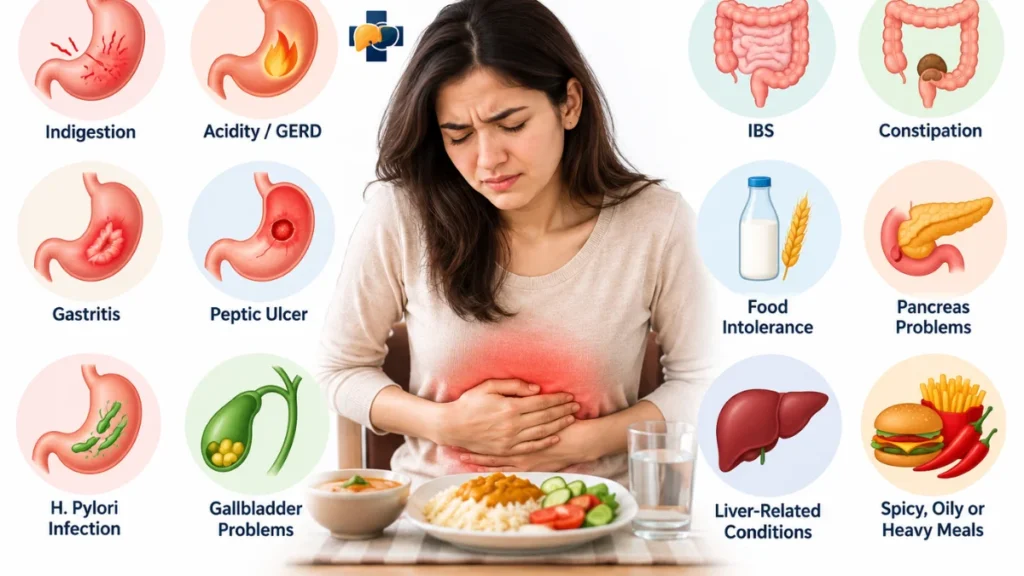
The timing of bloating can provide useful clues, but it does not identify the cause by itself. Here are nine possibilities that may need to be considered.
Also Read: Liver Function Test Normal Range: What SGPT, SGOT, Bilirubin, and GGT Mean
1. You May Be Eating Too Quickly
The way you eat can affect how much air enters your digestive system.
Eating very quickly, drinking through a straw, chewing gum, consuming fizzy drinks, or talking continuously while eating can increase swallowed air. Some of this air may later contribute to burping or abdominal discomfort.
Large meals can also leave the stomach feeling excessively full.
If your bloating appears particularly after rushed or heavy meals, slowing down and reducing meal size may be worth trying.
Also Read: Liver Function Test Normal Range: What SGPT, SGOT, Bilirubin, and GGT Mean
2. Constipation May Be Behind the Fullness
Bloating and constipation often appear together.
If bowel movements are infrequent, difficult, or incomplete, you may notice that your abdomen feels heavier or more uncomfortable after eating. A sluggish bowel movement may lead to abdominal fullness and discomfort, which can make bloating more noticeable.
Look for associated signs such as:
- Hard stools
- Straining while passing stool
- Fewer bowel movements than usual
- Feeling that some stool remains after using the toilet
- Abdominal fullness
If constipation continues for weeks or repeatedly returns, treating only the bloating may not address the underlying problem.
Also Read: How do I improve my liver naturally?
3. Irritable Bowel Syndrome Can Cause Repeated Bloating
IBS is a disorder that affects the interaction between the digestive system and the brain. IBS can cause repeated abdominal discomfort while also affecting a person’s usual bowel pattern.
Depending on the person, bowel movements may become more frequent, less frequent, or alternate between diarrhea and constipation. Bloating can occur as part of this pattern.
One person may notice symptoms after certain foods, while another may notice them during periods of stress or changes in routine.
If bloating repeatedly occurs with abdominal pain and bowel changes, IBS may be one of the conditions a gastroenterologist considers.
Also Read: When Should You See a Gastroenterologist? Signs You Should Not Ignore
4. A Particular Food May Not Suit Your Digestive System
Some people develop digestive symptoms after consuming specific foods or ingredients.
For example, lactose intolerance can cause symptoms after consuming lactose-containing foods. People with this condition may experience stomach swelling, digestive discomfort, excess gas, or loose stools. Other carbohydrates can also produce symptoms in people who have difficulty digesting or absorbing them.
A useful approach is to notice whether the same symptoms repeatedly follow a particular food instead of removing multiple foods from your diet at once.
Keeping a simple food-and-symptom diary can help identify patterns.
5. Your Diet May Be Producing More Gas
Gas is a normal part of digestion. Intestinal bacteria break down carbohydrates that were not completely digested earlier, and this process produces gas.
Some foods may trigger stronger digestive reactions, leading to increased gas, fullness, or bloating.
Fizzy drinks are another common contributor because they add gas to the digestive tract.
A food that triggers bloating in one person may be completely well tolerated by someone else. This is why blindly following long lists of “gas-producing foods” is not always helpful.
Instead, pay attention to your own pattern.
6. Indigestion May Be Making You Feel Full Too Soon
Indigestion, also called dyspepsia, can cause discomfort in the upper abdomen and may be accompanied by bloating, nausea, belching, or a feeling of being full earlier than expected.
For some people, even a relatively small meal can produce an uncomfortable sense of fullness.
Persistent indigestion may have several possible explanations, including functional dyspepsia, certain medicines, infections such as H. pylori, ulcers, or other digestive conditions.
If the problem continues rather than appearing occasionally, it is better to find out why it is happening.
7. Acidity or GERD May Be Occurring Alongside the Bloating
Bloating is not the same thing as acid reflux, but the symptoms can appear together.
You may notice:
- Bloating after meals
- Burning in the chest or upper abdomen
- Sour fluid coming into the mouth
- Frequent burping
- Nausea
- Discomfort after large meals
If you repeatedly take medicines for acidity but the symptoms continue, the problem should not automatically be assumed to be simple gas or acidity.
Your doctor may need to consider the complete pattern of symptoms before deciding whether further evaluation is required.
Also Read: Endoscopy Test Price: When Is the Procedure Recommended and What Should You Know?
8. Celiac Disease and Other Conditions Can Sometimes Cause Bloating
Persistent bloating can occasionally be connected with conditions that affect the small intestine.
Celiac disease is one example. It can cause digestive symptoms including bloating, abdominal pain, diarrhea, constipation, nausea and gas.
This does not mean that regular bloating automatically indicates celiac disease. It is one possibility among many.
If bloating continues for a long time, particularly when accompanied by changes in bowel habits, weight loss or nutritional problems, a doctor may consider whether further testing is appropriate.
9. Small Intestinal Bacterial Overgrowth and Other Digestive Problems
Changes in the bacteria present in the small intestine can sometimes contribute to gas and bloating.
Small intestinal bacterial overgrowth, commonly called SIBO, may also occur with symptoms such as diarrhea or weight loss and is often associated with another underlying condition.
Other gastrointestinal disorders can also produce bloating or abdominal distension.
That is why persistent bloating should not always be treated as excess gas without considering the rest of the symptoms.
Why Does Bloating Happen Even After a Small Meal?
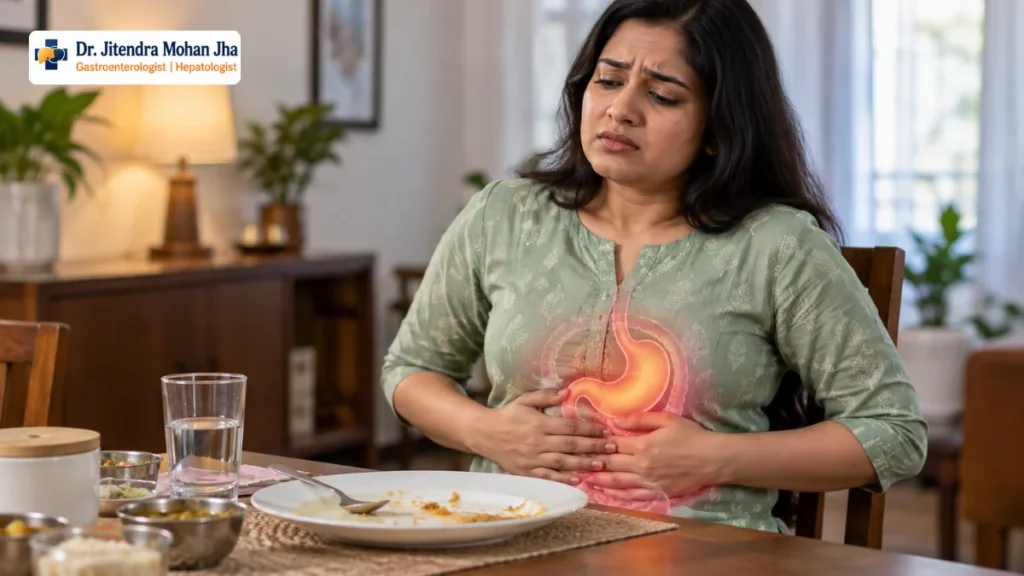
Some people become uncomfortable after eating only a modest amount of food.
This can happen with indigestion and certain disorders affecting how the upper digestive tract handles food. Feeling full unusually early, especially when it happens repeatedly, can be an important part of the medical history.
Pay attention to whether you also experience:
- Loss of appetite
- Nausea
- Upper abdominal discomfort
- Weight loss
- Repeated vomiting
- Persistent heartburn
These details can help a doctor understand whether the problem is simply meal-related fullness or part of a broader digestive condition.
What Can I Do to Reduce Bloating After Meals?
The right solution depends on the reason for the bloating. Still, a few simple habits may help some people.
Try these practical steps:
- Eat slowly rather than rushing through meals.
- Avoid overeating in a single sitting.
- Reduce fizzy drinks if they make your symptoms worse.
- Notice whether particular foods consistently trigger symptoms.
- Drink enough fluids throughout the day.
- Stay physically active.
- Address ongoing constipation instead of repeatedly treating the gas alone.
- Keep a record of meals and symptoms if the pattern is difficult to identify.
If constipation is contributing to the problem, gradually increasing appropriate fibre may help some people. However, suddenly adding a large amount of fibre can increase gas and bloating, particularly in people with IBS.
Some patients may benefit from a structured dietary approach such as a low-FODMAP diet, but it is better to use such diets with appropriate medical or dietetic guidance rather than eliminating many foods unnecessarily.
Should You Stop Eating Foods That Cause Bloating?
Not necessarily.
If a particular food seems to trigger symptoms, it can be useful to record the food, quantity, timing and symptoms. This may reveal whether the reaction is consistent.
However, repeatedly removing foods from your diet without knowing the cause can make your diet unnecessarily restrictive.
A doctor or dietitian can help determine whether the symptoms are more consistent with an intolerance, IBS, another digestive disorder, or simply a food that does not suit you.
- Also Read: What are the Super Foods for the Liver?
When Is Bloating a Sign That You Should See a Doctor?
Occasional bloating is usually different from bloating that keeps returning without an obvious explanation.
You should arrange a medical evaluation if your bloating is persistent or regularly interferes with eating and daily activities.
Seek medical attention particularly when bloating is accompanied by:
- Unexplained weight loss
- Blood in the stool
- Black or tar-like stools
- Repeated vomiting
- Severe or persistent abdominal pain
- Difficulty swallowing
- Loss of appetite
- Significant changes in bowel habits
- Yellowing of the eyes or skin
- A steadily increasing abdominal swelling
Some of these symptoms can occur with serious gastrointestinal problems and should not simply be attributed to gas. NIDDK specifically lists persistent abdominal swelling, weight loss, vomiting, bleeding and jaundice among symptoms that warrant medical attention when associated with indigestion.
How Does a Gastroenterologist Find the Cause of Frequent Bloating?
There is no universal “bloating test.”
The evaluation usually starts with your symptoms and their pattern.
Your doctor may want to know:
- How long you have been experiencing bloating
- Whether it starts immediately or later after eating
- Whether particular foods trigger it
- How frequently you pass stool
- Whether constipation or diarrhea occurs
- Whether you have acidity or heartburn
- Whether you have lost weight
- Which medicines or supplements you take
- Whether you have any previous digestive conditions
A food and symptom diary can sometimes be useful because it gives the doctor a clearer picture of the relationship between meals and symptoms.
Depending on what your symptoms suggest, further evaluation may include blood tests, stool testing, imaging, or other investigations. The appropriate test depends on the suspected cause rather than the presence of bloating alone.
When to Visit a Gastroenterology Clinic in Patna
If you frequently experience bloating after meals, particularly when it occurs with acidity, constipation, diarrhea, abdominal pain, nausea, vomiting, or unexplained weight loss, consulting a gastroenterologist can help determine what may be causing the symptoms.
Rather than repeatedly treating bloating as simple gas, a proper medical evaluation can help identify whether the problem may be associated with eating habits, constipation, IBS, food intolerance, indigestion, acid reflux, or another digestive condition.
Patients looking for a gastroenterologist in Patna can consult Dr. Jitendra Mohan Jha Gastro & Liver Clinic for evaluation of persistent bloating and other recurring digestive concerns.
If bloating continues or starts affecting your daily comfort, getting appropriate medical guidance can help you understand the underlying cause and choose the next steps based on your symptoms.
Also Read: What Are the Symptoms of Fatty Liver? Silent Signs You Should Not Ignore
FAQs
1. Why do I feel bloated after every meal?
Frequent bloating can have different causes, including swallowed air, dietary factors, constipation, food intolerance, IBS, indigestion, reflux, or other gastrointestinal conditions. The accompanying symptoms and timing can help identify the likely cause.
2. Is it normal to feel bloated after eating?
Occasional bloating can happen as part of normal digestion. Gas is naturally present in the digestive tract, and some gas symptoms commonly occur during or after meals. Frequent or troublesome bloating is different and may need evaluation.
3. Can constipation cause stomach bloating?
Yes. Constipation can occur alongside abdominal fullness and bloating. If constipation keeps returning, addressing its underlying cause may be more useful than repeatedly treating the bloating alone.
4. Can IBS cause bloating after eating?
IBS can cause bloating along with abdominal pain and changes in bowel movements. The symptoms and food triggers can vary considerably between individuals.
5. Why does my stomach feel full after eating only a little?
Feeling uncomfortably full after a small amount of food can occur with indigestion and other upper digestive problems. If this happens regularly, particularly with weight loss, vomiting or persistent pain, medical evaluation is advisable.
6. Can milk cause bloating?
People with lactose intolerance may develop bloating, gas, abdominal discomfort or diarrhea after consuming lactose-containing foods. If dairy consistently triggers symptoms, discuss the pattern with a healthcare professional rather than assuming all dairy products must be avoided permanently.
7. Can acidity cause bloating?
Acidity and bloating can occur together, although they are not the same condition. If bloating repeatedly occurs with heartburn, regurgitation, nausea or upper abdominal discomfort, the complete symptom pattern should be evaluated.
8. When should I see a gastroenterologist for bloating?
Consider consulting a gastroenterologist when bloating is persistent, repeatedly returns, affects your daily life, or occurs with symptoms such as weight loss, bleeding, vomiting, significant bowel changes or persistent abdominal pain.