
Stomach pain after eating food is a common digestive complaint, but the cause is not the same for every person. Sometimes it happens after overeating, eating too quickly, or consuming spicy, oily, or heavy meals. In other cases, it may be linked with acidity, GERD, gastritis, ulcer, gallbladder problems, food intolerance, IBS, constipation, H. pylori infection, or another digestive condition.
Mild discomfort after a heavy meal may improve with simple diet and lifestyle changes. But repeated stomach pain after eating food should not be ignored, especially when it affects appetite, causes vomiting, leads to weight loss, disturbs sleep, or appears with black stool, blood in stool, anemia, fever, jaundice, or difficulty swallowing.
Patients searching for the gastroenterologist in Patna for repeated stomach pain after meals should focus on proper diagnosis rather than taking repeated acidity medicines without knowing the real cause. Treatment works better when the underlying reason is identified.
Also Read: What Are the Symptoms of Fatty Liver? Silent Signs You Should Not Ignore
What Does Stomach Pain After Eating Food Mean?
Stomach pain after eating food means discomfort, burning, heaviness, cramps, or pain that begins during or after a meal. The pain may be felt in the upper abdomen, middle abdomen, lower abdomen, right side, or left side depending on the cause.
Some patients may notice a burning sensation in the upper abdomen shortly after meals. Others feel bloating, pressure, cramps, nausea, or fullness after a small meal. The timing, location, type of pain, and associated symptoms help the doctor understand the possible cause.
For example, upper abdominal burning after meals may suggest indigestion, acidity, gastritis, or ulcer. Right upper abdominal pain after oily food may suggest gallbladder-related problems. Lower abdominal cramps with stool changes may suggest IBS, infection, or bowel-related conditions.
Is Stomach Pain After Eating Always Serious?
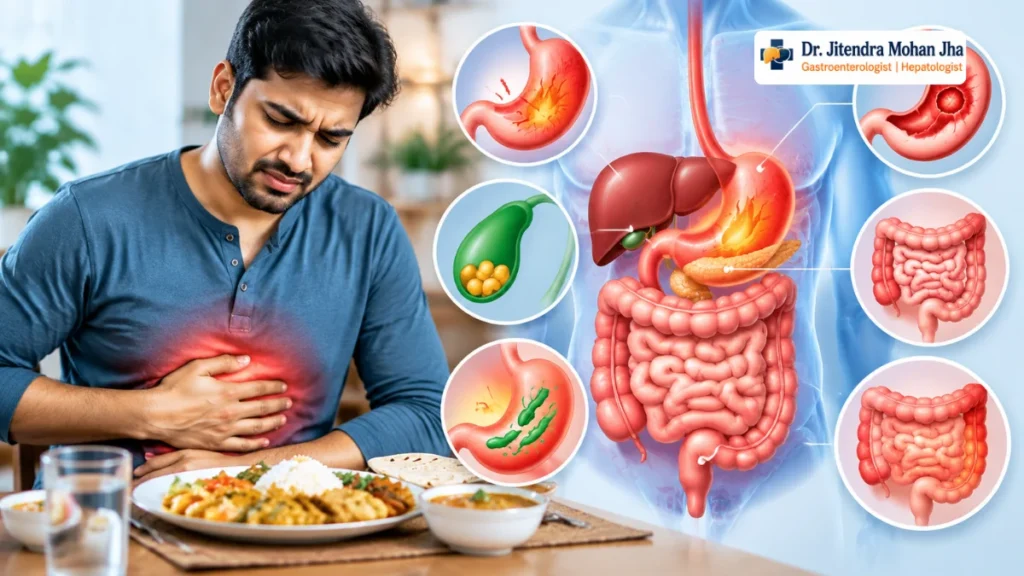
No, stomach pain after eating is not always serious. In many cases, it may be related to large meals, fast eating, gas buildup, constipation, or foods that trigger digestive discomfort. However, repeated, severe, or worsening pain needs evaluation.
Mild pain that happens once after a heavy or unusual meal may improve with rest, lighter food, hydration, and avoiding triggers. But if stomach pain after eating food happens frequently, it should not be treated as “normal gas” without checking the cause.
Medical evaluation becomes more important when the pain is new, recurring, severe, or associated with warning signs such as vomiting, weight loss, blood in stool, black stool, anemia, fever, jaundice, or difficulty swallowing. Abdominal pain may have many causes, and healthcare providers often use the location, pattern, and timing of pain to identify the likely reason.
Also Read: Liver Function Test Normal Range: What SGPT, SGOT, Bilirubin, and GGT Mean
Common Causes of Stomach Pain After Eating Food
Stomach pain after meals can happen due to stomach, intestine, gallbladder, liver, pancreas, or bowel-related conditions. Eating patterns or intolerance to certain foods may also play a role in triggering the pain.
Also Read: Liver Function Test Normal Range: What SGPT, SGOT, Bilirubin, and GGT Mean
1. Indigestion or Dyspepsia
Indigestion is a frequent reason for upper abdominal discomfort after meals. It can lead to burning, pain, bloating, nausea, repeated burping, feeling full too soon, or uncomfortable heaviness after eating. NIDDK describes indigestion as a group of symptoms that can include upper abdominal pain or burning, feeling full too soon while eating, uncomfortable fullness after a meal, bloating, nausea, and belching.
Indigestion may happen after heavy meals, spicy food, oily food, stress, certain medicines, or irregular eating habits. Sometimes it is functional, meaning no major structural disease is found. But repeated indigestion should be checked, especially when it is persistent or associated with warning symptoms.
Also Read: How do I improve my liver naturally?
2. Acidity and GERD
Acidity and GERD can cause burning, sour burps, chest burning, throat irritation, nausea, and stomach discomfort after eating. GERD happens when stomach contents move back into the food pipe and cause repeated symptoms or complications over time. NIDDK notes that GERD commonly causes heartburn and regurgitation, and doctors may recommend avoiding meals close to lying down and avoiding personal food triggers.
Pain related to acidity or GERD may become worse after spicy food, fried food, tea, coffee, alcohol, late-night meals, or lying down soon after eating. Repeated use of antacids without evaluation may give temporary relief but may not treat the actual cause.
Also Read: When Should You See a Gastroenterologist? Signs You Should Not Ignore
3. Gastritis
Gastritis means inflammation of the stomach lining. It may cause upper abdominal pain, burning, nausea, vomiting, bloating, loss of appetite, or fullness after eating. NIDDK explains that gastritis and gastropathy can cause indigestion-like symptoms, including upper abdominal pain or discomfort and feeling too full after a meal.
Common triggers may include H. pylori infection, long-term painkiller use, alcohol, bile reflux, stress-related illness, or other medical conditions. Gastritis should be properly evaluated if symptoms are frequent, painful, or associated with vomiting, black stool, anemia, or weight loss.
4. Peptic Ulcer Disease
A peptic ulcer is an open wound that forms on the inner lining of the stomach or the upper part of the small intestine. It may cause burning pain, hunger pain, nausea, bloating, or discomfort after meals. In some patients, ulcer pain may improve briefly after eating and then return later.
H. pylori infection and regular use of certain painkillers are important causes of ulcers. Mayo Clinic notes that H. pylori bacteria can cause ulcers in the stomach or small intestine, and indigestion symptoms may include burning pain and fullness during or after eating.
Ulcers need proper diagnosis and treatment. If ulcer-related bleeding occurs, the patient may notice black stool, vomiting blood, weakness, or anemia.
5. H. Pylori Infection
H. pylori is a bacteria that can infect the stomach lining and may be linked with gastritis and ulcers. It may lead to upper-abdominal discomfort, a burning sensation, bloating, nausea, frequent burping, feeling full too soon, or ongoing indigestion.
Not every person with H. pylori has symptoms, and symptoms alone cannot confirm the infection. Testing may be advised when the doctor suspects H. pylori-related gastritis or ulcer. Treatment usually requires a proper medicine plan, not random antibiotics.
6. Gallbladder Stones or Bile-Related Problems
Gallbladder-related pain may appear after oily or fatty food. It is often felt in the right upper abdomen and may spread to the back or right shoulder. Some people also feel nausea, vomiting, heaviness, or bloating after meals.
Gallbladder pain should be evaluated early if it is severe, recurrent, or associated with fever, jaundice, vomiting, pale stool, or dark urine. These symptoms may suggest infection, bile duct blockage, or other complications.
Also Read: Endoscopy Test Price: When Is the Procedure Recommended and What Should You Know?
7. Food Intolerance
Food intolerance can cause stomach pain after eating specific foods. It may also cause gas, bloating, cramps, loose motion, nausea, or discomfort.
Common examples include:
- Lactose intolerance after milk or dairy products
- Gluten-related symptoms after wheat-based foods
- Fructose intolerance after certain fruits or sweeteners
- Sensitivity to high-FODMAP foods
- Symptoms after very spicy, oily, or processed foods
A food diary can help identify patterns. Write down what you ate, when pain started, how long it lasted, and whether stool changes, bloating, or nausea occurred.
8. IBS
Irritable bowel syndrome can cause abdominal pain after meals, bloating, gas, constipation, loose motion, or alternating bowel habits. In IBS, the intestine may become more sensitive, and meals can trigger bowel movement or cramps.
IBS is a common digestive condition, but it should be confirmed by a doctor instead of assuming it on your own. Symptoms such as weight loss, blood in stool, black stool, anemia, fever, night-time diarrhea, or new symptoms after middle age need proper medical evaluation.
9. Constipation
Constipation can cause stomach pain, heaviness, bloating, gas, and discomfort after eating. When stool remains in the colon for longer, gas may build up and cause pressure or cramps.
Constipation-related pain may improve after passing stool or gas. Treatment may include better hydration, fiber adjustment, physical activity, stool-softening medicines when needed, and evaluation for long-standing or worsening constipation.
10. Pancreas or Liver-Related Conditions
Some pancreas or liver-related conditions can cause upper abdominal pain, nausea, vomiting, loss of appetite, jaundice, or abnormal reports. Pancreatitis may cause severe upper abdominal pain that may spread to the back and can worsen after food in some cases.
Liver or bile duct-related conditions may cause abdominal pain with jaundice, dark urine, pale stool, itching, fever, vomiting, or abnormal liver function tests. These symptoms should not be managed with home remedies.
Where Is the Pain Located After Eating?
The location of pain can help narrow down the possible cause, but it cannot confirm the diagnosis by itself.
- Upper middle abdomen: indigestion, gastritis, ulcer, acidity, pancreas-related problems
- Chest burning with upper abdominal discomfort: GERD or acid reflux
- Right upper abdomen: gallbladder, bile duct, liver-related conditions
- Lower abdomen: constipation, IBS, infection, colitis, bowel-related conditions
- Around the navel: gas, indigestion, infection, intestinal causes
- Generalized bloating and cramps: gas, constipation, IBS, food intolerance
Pain location should be interpreted along with timing, severity, food triggers, stool pattern, vomiting, fever, weight loss, and medical history.
When Should Stomach Pain After Eating Food Be Checked?
Stomach pain after meals needs medical evaluation if it occurs again and again, becomes intense, or continues despite basic care. It should also be evaluated if it affects appetite, sleep, weight, or daily activities.
You should consider medical evaluation if you have:
- Pain after most meals
- Burning or discomfort for many days
- Pain with nausea or vomiting
- Loss of appetite
- Feeling full after eating very little
- Pain with repeated acidity or sour burps
- Pain with constipation or loose motion
- Pain after oily food again and again
- Symptoms returning after stopping acidity medicines
- Need for frequent antacid use
A practical approach is simple: one-time mild discomfort after a heavy meal may be observed, but repeated stomach pain after eating food needs proper evaluation.
Warning Signs You Should Not Ignore
Stomach pain after eating should not be ignored when it appears with bleeding, weight loss, vomiting, fever, jaundice, anemia, or difficulty swallowing. These symptoms may point toward a more serious digestive condition.
Seek medical attention if pain comes with:
- Vomiting blood
- Black stool
- Blood in stool
- Unexplained weight loss
- Persistent vomiting
- Difficulty swallowing
- Severe or worsening abdominal pain
- Fever
- Jaundice
- Dark urine or pale stool
- Severe weakness or dizziness
- Anemia
- Loss of appetite for many days
- New pain after the age of 40 or 50
- Family history of digestive cancer
MedlinePlus notes that abdominal pain that occurs more often, lasts more than 24 hours, or occurs with fever or rectal bleeding can be more concerning and may need medical care.
How Doctors Diagnose Stomach Pain After Eating Food
Diagnosis starts with understanding the pain pattern. The doctor may ask where the pain is felt, when it starts after eating, what foods trigger it, how long it lasts, and whether there is acidity, vomiting, bloating, constipation, loose motion, blood in stool, black stool, fever, or weight loss.
The doctor may also ask about painkiller use, alcohol intake, diabetes, thyroid disease, liver disease, previous surgery, gallbladder history, family history, and current medicines.
Depending on symptoms, tests may include:
- Blood tests
- Liver function test
- Pancreatic enzyme tests when needed
- Stool test
- H. pylori testing
- Ultrasound abdomen
- Upper GI endoscopy
- Colonoscopy in selected cases
- CT scan or other imaging when required
Not every patient needs every test. The right investigation depends on symptoms, age, warning signs, examination findings, and medical history. NIDDK notes that doctors may use symptoms, medical and family history, physical examination, and tests to diagnose the cause of indigestion.
- Also Read: What are the Super Foods for the Liver?
What Can You Do at Home for Mild Pain After Eating?
For mild and occasional pain, simple changes may help. These simple steps can be helpful when the pain seems connected to heavy meals, fast eating, or specific trigger foods, and no warning signs are present.
Helpful steps include:
- Eat smaller meals.
- Chew food properly.
- Avoid eating too fast.
- Avoid lying down immediately after meals.
- Reduce spicy, oily, and fried foods if they trigger pain.
- Avoid carbonated drinks.
- Limit tea, coffee, and alcohol if they worsen symptoms.
- Take a short walk after meals.
- Keep a food and symptom diary.
- Treat constipation early.
- Drink enough water.
- Avoid unnecessary painkiller use.
Do not keep taking acidity medicines, digestive enzymes, antibiotics, or herbal medicines repeatedly without diagnosis. If symptoms continue, proper evaluation is safer.
Common Mistakes Patients Make
Many patients assume that every stomach pain after eating food is due to gas or acidity. This can delay diagnosis when the real cause is ulcer, gallbladder disease, H. pylori infection, liver-related problems, bowel disease, or another condition.
Common mistakes include:
- Taking antacids daily without medical advice
- Ignoring black stool or blood in stool
- Taking painkillers for stomach pain
- Using antibiotics without prescription
- Avoiding many foods without knowing the trigger
- Ignoring repeated vomiting
- Delaying evaluation because pain improves temporarily
- Assuming gallbladder pain is acidity
- Depending only on home remedies
Temporary relief does not always mean the underlying problem has been treated.
Treatment for Stomach Pain After Eating Food
Treatment depends on the cause. A patient with acidity needs a different plan from someone with gallbladder stones, ulcer, H. pylori infection, constipation, IBS, or food intolerance.
Treatment may include:
- Diet and meal timing correction
- Acidity or GERD treatment
- Gastritis treatment
- Ulcer treatment
- H. pylori treatment when confirmed
- Constipation treatment
- IBS management
- Food intolerance guidance
- Gallbladder evaluation and treatment when needed
- Liver, pancreas, or bile duct evaluation when symptoms suggest
- Endoscopy or imaging when warning signs are present
The goal is not just to reduce pain temporarily, but to identify why pain is happening after food and treat the actual cause.
When to Visit a Gastroenterology Clinic in Patna
You should visit a gastroenterology clinic in Patna if stomach pain after eating food happens frequently, does not improve with routine care, or appears with acidity, vomiting, bloating, constipation, loose motion, black stool, blood in stool, weight loss, anemia, jaundice, or difficulty swallowing.
Patients searching for the gastroenterologist in Patna should focus on proper diagnosis, safe medicine use, food trigger assessment, and treatment based on the real cause of symptoms. Repeated stomach pain after meals should not be managed only with antacids or home remedies.
For stomach pain after eating food, acidity, gastritis, GERD, ulcer symptoms, H. pylori concerns, gallbladder-related pain, constipation, bloating, or other digestive symptoms, call +919942728701 to book an appointment with Dr. Jitendra Mohan Jha Gastro & Liver Clinic.
Also Read: What Are the Symptoms of Fatty Liver? Silent Signs You Should Not Ignore
Conclusion
Stomach pain after eating food may be mild and temporary, especially after overeating, eating too quickly, or consuming heavy meals. But repeated pain after meals should not be ignored.
The cause may be acidity, indigestion, gastritis, ulcer, GERD, food intolerance, IBS, constipation, gallbladder disease, H. pylori infection, liver-related issues, pancreas-related problems, or another digestive condition. The right treatment depends on identifying the real cause.
If symptoms are frequent, worsening, painful, or linked with warning signs, timely medical evaluation can help guide the right treatment and prevent delay.
FAQs
1. Why does my stomach hurt after eating food?
Stomach pain after eating food may happen due to indigestion, acidity, GERD, gastritis, ulcer, gas, constipation, food intolerance, IBS, gallbladder problems, H. pylori infection, or other digestive conditions.
2. Is stomach pain after eating normal?
Occasional mild pain after overeating or eating heavy food may be normal. But repeated, severe, or worsening pain after meals should be evaluated.
3. When should I worry about stomach pain after eating?
You should worry if pain comes with vomiting, black stool, blood in stool, weight loss, fever, anemia, jaundice, difficulty swallowing, severe pain, or loss of appetite.
4. Can acidity cause stomach pain after eating?
Yes. Acidity, GERD, gastritis, and indigestion can cause burning, burping, sour taste, nausea, and upper abdominal pain after eating.
5. Can gallbladder stones cause pain after meals?
Yes. Gallbladder stones may cause right upper abdominal pain, nausea, vomiting, or heaviness after oily or fatty meals. Pain with fever or jaundice needs urgent evaluation.
6. What foods can trigger stomach pain after eating?
Spicy foods, fried foods, oily meals, carbonated drinks, alcohol, tea, coffee, dairy products in lactose intolerance, wheat in gluten-related conditions, and large meals may trigger symptoms in some people.
7. What tests may be needed for stomach pain after eating?
Depending on symptoms, tests may include blood tests, liver function test, stool test, H. pylori testing, ultrasound abdomen, endoscopy, colonoscopy, or imaging tests.
8. Which doctor should I consult for stomach pain after eating in Patna?
You should consult a gastroenterologist if stomach pain after eating is frequent, painful, or linked with acidity, vomiting, black stool, blood in stool, weight loss, anemia, jaundice, or difficulty swallowing. Patients searching for the gastroenterologist in Patna should choose a doctor who focuses on proper diagnosis and cause-based treatment.