

Stomach Pain Every Day but All Tests Are Normal: What Could Be Going On?
Having stomach pain every day can be frustrating, particularly when blood tests, ultrasound, or other investigations have not shown an obvious problem.
But a normal test does not always mean that there is no explanation for your symptoms.
Different tests look for different conditions. Some digestive problems can be identified on imaging or blood tests, while others are diagnosed mainly from the pattern of symptoms, medical history, examination, and selected investigations.
If you have ongoing stomach pain despite apparently normal reports, the important question is not simply, “Why are my tests normal?” It is:
“Does the pattern of my symptoms suggest a condition that requires a different type of evaluation?”
What Does “All Tests Are Normal” Actually Mean?
A test can only look for the problems that it is designed to detect.
For example, an ultrasound can examine several abdominal organs, but it does not identify every cause of stomach pain. Blood tests can provide information about inflammation, infection, anemia, liver or pancreatic problems, kidney function, and other conditions, but they cannot diagnose every digestive disorder.
This is why your previous reports should be interpreted together with your symptoms.
Doctors usually pay attention to:
- Where the pain occurs
- When it started
- Whether it is constant or comes and goes
- How long each episode lasts
- Whether eating changes the pain
- Whether passing stool or gas affects it
- Whether nausea, vomiting, bloating, constipation or diarrhoea occur
- Whether the pain spreads to another area
- Whether there has been weight loss, bleeding or fever
The history and physical examination are important parts of evaluating abdominal pain, even when previous investigations were normal.
Read More: Stomach Pain After Eating Food: Causes, Warning Signs, and Treatment
What Can Cause Stomach Pain When Tests Are Normal?
There are several possibilities. The possible explanation varies depending on where the discomfort occurs and how the pain behaves.
Functional dyspepsia
Functional dyspepsia is one possible explanation for persistent upper-abdominal symptoms when no structural abnormality adequately explains them.
It can involve:
- Upper abdominal pain or burning
- Feeling unusually full during or after meals
- Feeling full sooner than expected
- Bloating
- Nausea
- Belching
The symptoms are real even when routine investigations do not reveal an ulcer or another obvious structural problem.
Functional dyspepsia is considered a disorder of gut-brain interaction, meaning communication between the digestive system and nervous system can influence how digestive sensations are experienced.
Gas and bloating
Abdominal discomfort may accompany gas when bloating or altered movement within the intestines contributes to the sensation.
In some cases, the discomfort becomes easier to tolerate after passing gas or opening the bowels. Certain foods, constipation, eating patterns, and individual digestive sensitivities may also contribute.
However, persistent abdominal pain should not automatically be labelled as “gas” without considering the wider symptom pattern.
Indigestion
Indigestion, also called dyspepsia, can cause upper-abdominal discomfort, burning, early fullness, or uncomfortable fullness after eating.
It can occur with conditions such as reflux or peptic ulcer disease, but sometimes no structural cause is found, and the symptoms are classified as functional dyspepsia.
Acid reflux
Acid reflux can cause a burning or warm sensation in the chest and may also be felt as discomfort in the upper abdomen.
Some people also experience a sour taste, regurgitation, belching, or symptoms that become worse after eating or lying down.
Although reflux and indigestion can produce similar complaints, they refer to different digestive problems.
Constipation and bowel-related problems
Constipation may lead to abdominal pain along with bloating, a feeling of pressure, or general discomfort. Symptoms may change after passing stool.
Problems involving the bowel may also lead to repeated abdominal pain, especially when the pain occurs together with noticeable changes in stool frequency or consistency.
Irritable bowel syndrome
Irritable bowel syndrome (IBS) can cause recurring abdominal discomfort, with bowel habits that may involve constipation, diarrhoea, or alternating between both.
Routine investigations may not reveal a structural abnormality because IBS is primarily diagnosed from the characteristic symptom pattern after appropriate consideration of other conditions.
Can Stomach Pain After Eating Be a Clue?
Yes.
The relationship between food and pain can provide useful information, although it does not identify one specific diagnosis.
Discomfort that develops after eating can have several possible explanations, including indigestion, reflux, food sensitivity, gallbladder conditions, or other gastrointestinal problems.
Pay attention to the pattern rather than blaming one food immediately.
Ask yourself:
- How quickly does the pain begin after eating?
- Does it happen after almost every meal or only occasionally?
- Are large meals more likely to trigger it?
- Does fatty food make it worse?
- Do bloating or burping occur at the same time?
- Does passing stool or gas reduce the discomfort?
- Does the pain occur with nausea or vomiting?
Keeping a short record of meals and symptoms can sometimes make these patterns easier to identify.
What If My Stomach Pain Comes and Goes?
Stomach pain coming and going can occur with many digestive conditions.
Episodes of abdominal discomfort that come and go may be influenced by meals, bowel movements, intestinal gas, constipation, reflux, functional digestive conditions, or other factors.
The pattern matters.
Pain that consistently follows a meal has a different pattern from discomfort that mainly develops before passing stool. Pain that lasts a few minutes is different from pain that continues for several hours. Pain that gradually becomes stronger or occurs more often should receive greater attention than occasional, mild episodes.
The goal is not to diagnose yourself from the pattern, but to provide your doctor with useful information.
Does the Location of Stomach Pain Matter?
Yes.
“Stomach pain” is often used to describe discomfort anywhere in the abdomen, but the exact location can provide important clues.
Upper abdominal pain
Pain in the upper abdomen may be associated with indigestion, gastritis, peptic ulcer disease, reflux, gallbladder conditions, or problems involving nearby organs.
Middle abdominal pain
Pain around the middle of the abdomen can have digestive, intestinal, urinary, or other causes.
Lower abdominal pain
Lower abdominal discomfort may be related to constipation, bowel disorders, urinary problems, or pelvic conditions.
Right- or left-sided pain
Pain concentrated on one side can point toward a different group of possible causes, depending on whether it is high under the ribs, around the flank, or lower in the abdomen.
This is why the location, duration, radiation, and relationship to eating or bowel movements are important when evaluating abdominal pain.
Could Stress Cause Stomach Pain Even When Tests Are Normal?
Stress can influence digestive symptoms, but saying that stress is the cause of unexplained stomach pain without proper evaluation is not appropriate.
The digestive tract and nervous system communicate continuously. In disorders such as functional dyspepsia and IBS, changes in this gut-brain interaction can affect digestive sensations and symptoms.
Stress may worsen symptoms in some people, but persistent pain should still be evaluated based on its clinical pattern.
In other words, “stress-related” does not mean “imaginary.”
Could H. pylori Be the Reason?
It can be relevant in some people, particularly when symptoms are consistent with dyspepsia, or there is concern about peptic ulcer disease.
H. pylori is a type of bacteria that can infect the stomach lining and is linked to conditions such as gastritis and peptic ulcers.
Depending on the patient’s age, symptoms, medical history, and previous testing, a doctor may consider non-invasive H. pylori testing.
For people with dyspepsia who may benefit from testing, doctors may check for H. pylori and recommend treatment if the infection is confirmed.
A negative test does not mean that every possible cause of stomach pain has been excluded.
What If My Ultrasound and Blood Tests Are Normal?
This is where many patients become confused.
A normal ultrasound means that the conditions detectable by that examination were not identified. It does not rule out every stomach or intestinal disorder.
Similarly, normal bloodwork does not exclude every digestive condition.
Depending on the symptoms, a doctor may consider:
- H. pylori testing
- Stool investigations
- Repeat or additional blood tests
- Upper gastrointestinal endoscopy
- CT or other imaging
- Evaluation for functional digestive disorders
- Assessment for bowel-related conditions
The appropriate investigation depends on the clinical question. Ordering more tests simply because the first tests were normal is not always useful.
When Might an Endoscopy Be Considered?
Endoscopy is not necessary for every person with stomach pain.
It may become appropriate when the symptoms suggest an upper gastrointestinal problem that needs direct examination, when previous evaluation has not explained persistent symptoms, or when particular risk factors or warning features are present.
For dyspepsia, age and clinical risk factors influence the decision about endoscopy. Current ACG/CAG guidance recommends upper GI endoscopy for patients aged 60 or older with dyspepsia, while younger patients are generally assessed using a more selective approach. Individual circumstances can change that decision.
This is why a doctor should decide whether endoscopy is appropriate rather than assuming that every person with persistent stomach pain needs one.
When Should Stomach Pain With Normal Tests Still Concern You?
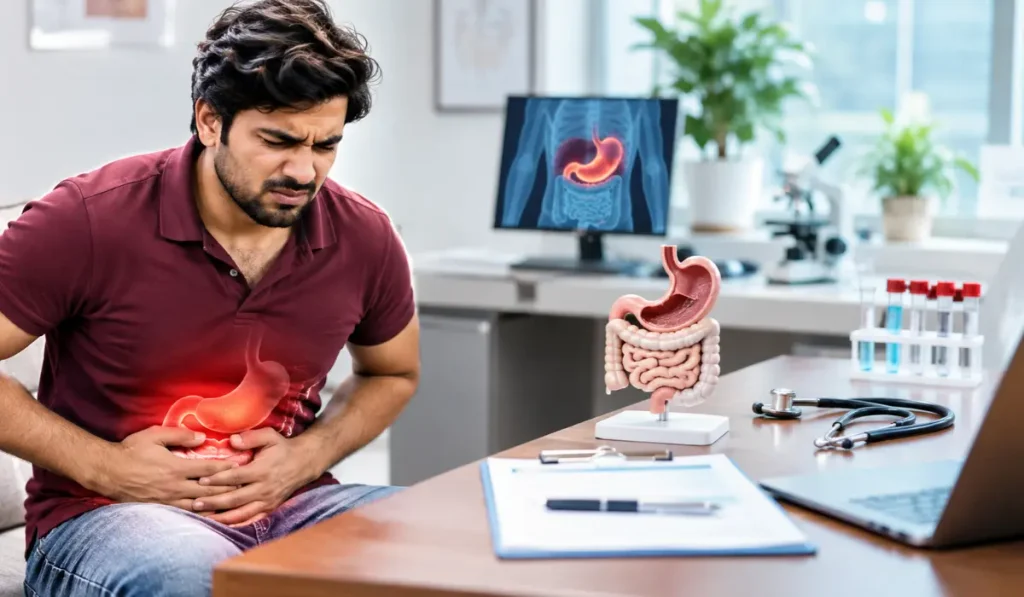
Normal reports should not be used as a reason to ignore new or worsening symptoms.
Seek prompt medical attention if abdominal pain occurs with warning signs such as:
- Severe or rapidly worsening pain
- Persistent or repeated vomiting
- Vomiting blood
- Black or bloody stool
- Significant unexplained weight loss
- Fever with significant abdominal pain
- Yellowing of the eyes or skin
- Severe abdominal tenderness or swelling
- Fainting or marked weakness
- Difficulty swallowing
- Persistent symptoms that are progressively worsening
These features do not automatically mean that a serious disease is present, but they warrant appropriate medical assessment. The American College of Gastroenterology specifically identifies fever, gastrointestinal bleeding, persistent nausea or vomiting, jaundice, severe abdominal tenderness, and abdominal swelling among concerning features associated with abdominal pain.
Read More: Right-Side Stomach Pain: What Can Cause It and When Should You Worry?
What Should You Tell Your Doctor?
If you have already had several tests, bring the actual reports to your consultation.
Also note:
- Where the pain is located
- When it began
- Whether it is daily or intermittent
- How long each episode lasts
- Whether it occurs after eating
- Whether passing stool or gas changes it
- Whether you have bloating or burping
- Any nausea or vomiting
- Constipation or diarrhoea
- Any blood or black stool
- Weight changes
- Medicines and supplements you take
- Previous abdominal surgery or medical conditions
This information can be more useful than simply saying, “My stomach hurts, and all my tests are normal.”
When Should You See a Gastroenterologist in Patna?
If stomach pain continues, repeatedly returns, interferes with eating or daily activities, or remains unexplained after an initial evaluation, a gastroenterology consultation may be appropriate.
A Gastroenterologist in Patna can review your previous reports alongside the location and pattern of your symptoms and determine whether further investigation is warranted.
The aim is not to keep ordering tests indefinitely. It is to identify the most likely explanation, rule out important conditions when necessary, and avoid investigations that are unlikely to add useful information.
Frequently Asked Questions
Why do I have stomach pain every day when all my tests are normal?
A normal test does not exclude every digestive disorder. Functional dyspepsia, IBS, reflux, indigestion, constipation, and other conditions may require assessment based on symptoms and clinical history rather than one abnormal test result.
Can gas cause stomach pain every day?
Gas and bloating can cause recurring abdominal discomfort, but persistent pain should not automatically be attributed to gas. The duration, location, severity, bowel pattern, and associated symptoms should also be considered.
Can stomach pain after eating be caused by indigestion?
Yes. Indigestion can cause upper-abdominal discomfort or fullness after meals. Reflux, food intolerance, gallbladder problems, and other digestive conditions can also produce meal-related symptoms.
What does stomach pain coming and going mean?
Intermittent pain can occur with several digestive and non-digestive conditions. The timing of episodes, their duration, relation to meals or bowel movements, and associated symptoms help determine what should be considered.
Can functional dyspepsia cause daily stomach pain?
Yes. Functional dyspepsia can cause recurring upper-abdominal pain or burning, early fullness, post-meal fullness, bloating, nausea, and related symptoms even when routine investigations do not identify a structural cause.
When should I worry about stomach pain?
Seek prompt medical assessment when pain is severe, rapidly worsening, or accompanied by bleeding, repeated vomiting, fever, jaundice, significant weight loss, severe tenderness, fainting, or other concerning symptoms.
Final Takeaway
Having normal test results does not mean that your stomach pain is imaginary, nor does it necessarily mean that nothing further needs to be considered.
Different tests answer different questions. A normal ultrasound or blood test can rule out or make certain conditions less likely, but some digestive disorders are identified mainly from the symptom pattern and clinical assessment.
If you have stomach pain every day, pay attention to where it occurs, when it happens, how long it lasts, whether food or bowel movements affect it, and which other symptoms appear alongside it.
Persistent symptoms may be related to indigestion, functional dyspepsia, reflux, gas, constipation, IBS, H. pylori, or another digestive condition. The appropriate evaluation depends on the individual clinical picture.
Most importantly, do not assume that recurring pain is simply gas or acidity just because an earlier test was normal. If the symptoms persist, change, or develop warning signs, they deserve appropriate medical review.